Side profile of a bearded man wearing a faded dark blue baseball cap and a matching dark T-shirt against a plain light gray background.

Why your house is so dusty in Manhattan, NY

Duct and vent cleaningDucts or ventsNew York County, NY
Step 1 of 2

What ZIP code is the job in?

Dust comes back fast when the ducts carrying your heat and air are coated inside with it, and every time the system runs, some of that gets pushed back into your rooms. In Manhattan, the furnace and AC cycle on and off for most of the year between a cold winter and a sticky summer, so the air is moving through those ducts constantly, picking up dust and fine debris and carrying it right back into your living space. A dirty filter makes it worse, since it stops catching the fine stuff and lets more through, but even a new filter won't help if the ducts themselves are loaded. If dusting and vacuuming aren't keeping up anymore, the buildup is most likely inside the system, not just in the room.

Empty basement room with bare concrete walls and floor, exposed wooden floor joists overhead, large galvanized sheet-metal ducts with a vent grille, colored pipes, and a single lit bulb.
Before you get your ductwork cleaning
Empty unfinished basement with bare concrete floor, insulated walls with vapor barrier between wood studs, exposed wood joists, galvanized sheet-metal ductwork, a recessed light, and a steel support column.
After you get your ductwork cleaning

Your system is a loop. Air gets pulled back through the return vents, passes through the filter, crosses the blower wheel, then gets pushed back out through the supply vents into your rooms. The filter stops a lot of it, but fine dust still gets past the edges and builds up on the duct walls and on the blower wheel itself over time. Once that wheel is coated, it loses its balance and moves less air, so the furnace or AC has to run longer to do the same job. The dust buildup also narrows the path air travels through the ducts, which raises the pressure inside them and forces more dust out through the seams. That means every cycle, the blower stirs up what has settled and sends some of it into the room you're in. Check the supply vents nearest your furnace or air handler first. Airflow is strongest there, so that's usually where the buildup shows up fastest and heaviest.

Where the dust is really coming from

  • A forced air system pulls room air back through return vents, across a filter, and past a blower wheel before sending it out again.
  • The filter catches a lot, but fine dust slips through the gaps around a standard filter and coats the duct walls and the blower wheel itself.
  • A blower wheel caked in dust spins out of balance and moves less air, so the system runs longer to reach the same temperature.
  • Static pressure inside the ducts builds when dust narrows the path air has to travel, and that pressure pushes more of it out through small gaps in the duct seams.
  • Every time the blower kicks on, it stirs up what has settled in the duct run and carries some of it straight into the rooms you're sitting in.
  • The supply vents closest to the furnace or air handler usually carry the heaviest buildup, since that's where airflow is strongest and dust collects fastest.
Unfinished basement with bare concrete floor and walls, exposed wood joists, large galvanized sheet-metal ductwork, PVC and copper piping, and a gray furnace unit beside wood stud framing.
Clean metal duct walls and a clear path mean the air moving past that furnace isn't picking up anything extra on its way to your rooms.
Basement ceiling with large galvanized sheet-metal ductwork, round metal pipes and plumbing lines running beneath wood joists, above a bare concrete wall and floor.
Dust built up along the ducts and joists gets stirred loose every time the blower kicks on, and some of it ends up back in your air.

Why does your house need dusting every few days?

You wipe a shelf clean and by the weekend there's a film on it again. A line of dust sits along the top of your baseboard heaters or sill. The air coming out of a vent smells faintly stale or burnt when the furnace first kicks on. You might notice it more in one room than another, usually whichever one sits farthest from the furnace. If anyone in the house has allergies or asthma, you may hear about it more in the months the system runs most. None of this means your house is dirty. It means the ducts are feeding dust back into rooms you just cleaned.

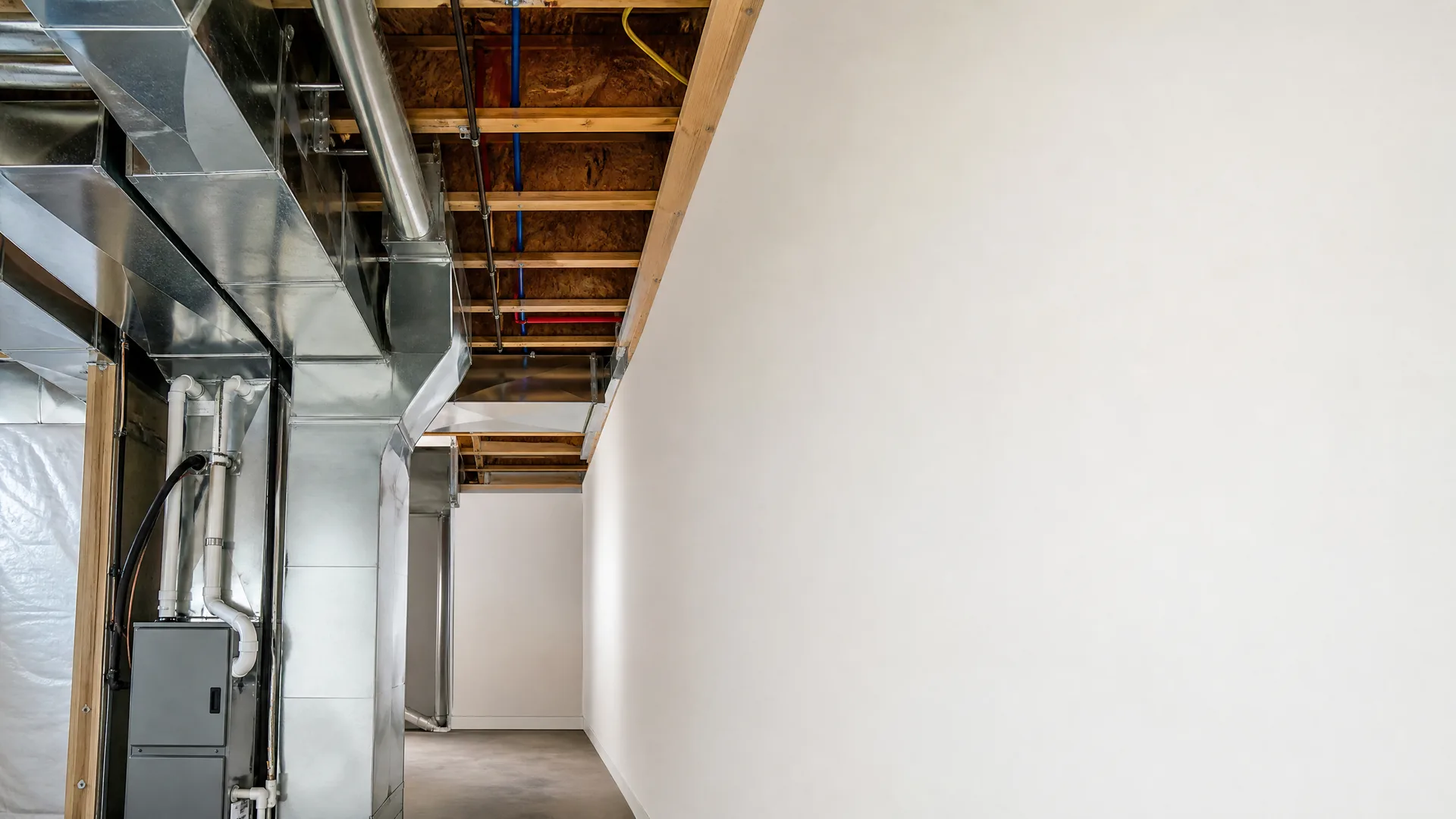
Unfinished basement corridor with exposed wood floor joists, pipes and wiring overhead, sheet-metal HVAC ductwork and an electrical panel along the left wall, and a blank white wall on the right.

The blower wheel does the spreading

Behind the filter sits a blower wheel, curved blades that push air through the ducts every time the system runs. Dust that slips past the filter settles on those blades. Once enough builds up, the wheel throws dust into the airstream instead of just moving air, and it rides every duct run straight back into your rooms. A wheel coated in dust also moves less air for the same effort, which is work your furnace or AC wasn't built to do.

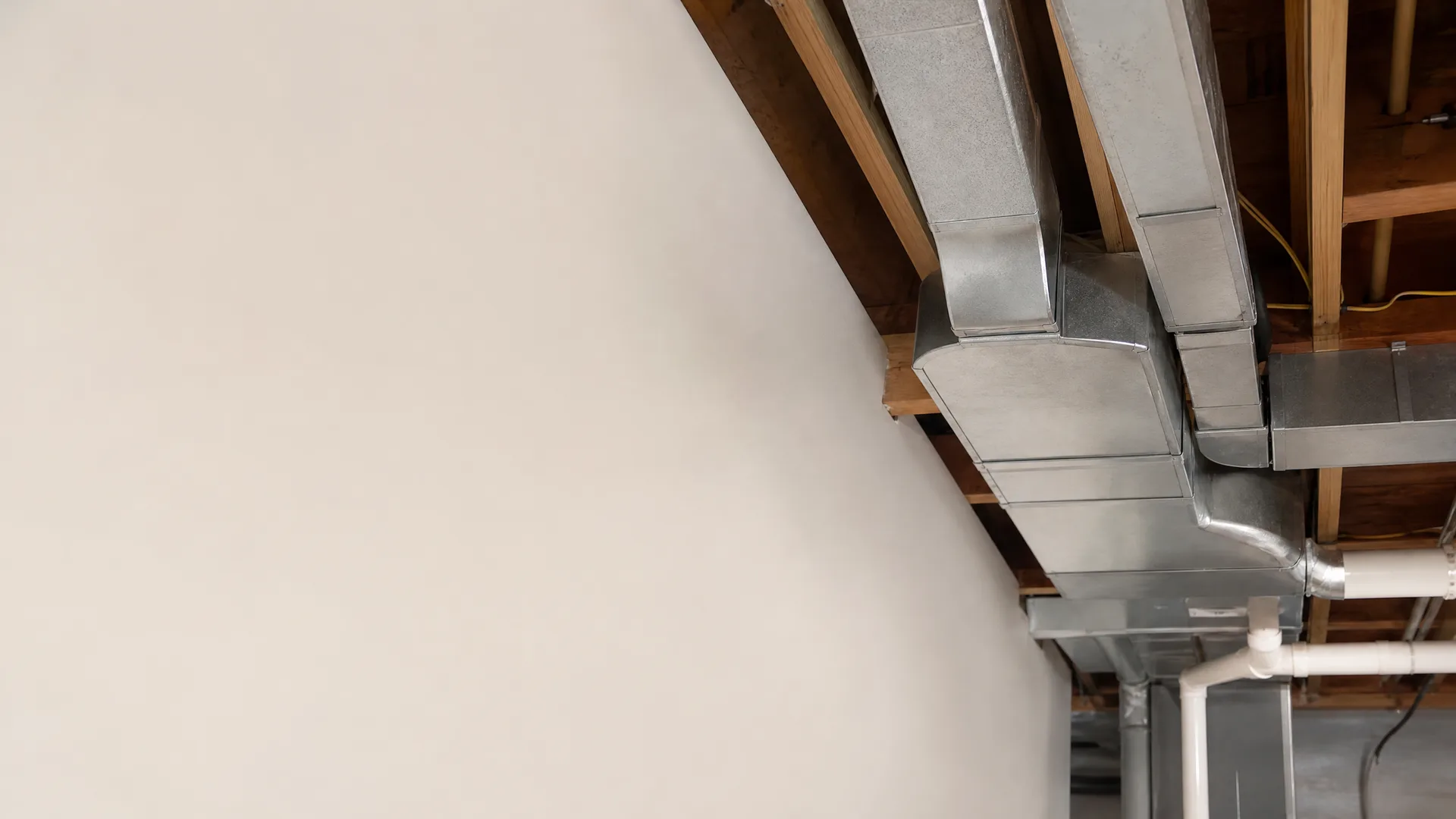
Interior basement ceiling with exposed wooden joists, sheet-metal HVAC ducts, and white PVC pipes beside a plain off-white wall.

Return runs collect the most

Return ducts pull air from your rooms before it reaches the filter, so they carry whatever is in that air first, dust, hair, fibers from carpet and upholstery. Over a cold winter and a sticky summer of near constant cycling, that buildup lines the inside of the metal. A return run with an inch of buildup along the bottom is pulling cleaner air at the grille than the duct is actually delivering downstream, and you can check this yourself with a flashlight at any accessible joint.

Why does dust build up so fast in a house like yours?

  • Half the homes here were built by 1951

    Half the homes in New York County were built in 1951 or earlier, which means the ductwork behind your walls has likely moved dust through the same joints and seams for decades.

  • Heat runs October through April

    Your system runs heat from October through April, about seven months of the year, so dust sitting in the ducts gets pushed into your rooms on most days you spend indoors.

  • Cooling runs June through September

    Add cooling from June through September and there are only a handful of weeks when the blower isn't running and recirculating whatever has built up inside the ducts.

ACS 2020-2024 · NOAA nClimDiv 1991-2020

An apartment with a smaller system

A lot of Manhattan housing runs on smaller forced air setups or shares ductwork with just a few units. Less duct run means less surface for dust to settle on, but it also means the air recirculates through the same stretch of metal more often during a long winter. If the ducts haven't been cleaned since the system went in, that shorter path doesn't save you much. The dust just has fewer feet to travel before it's back in your living room.


A brownstone with older ductwork

Plenty of buildings in the borough still have ductwork that predates the current furnace or AC unit, sometimes by decades. Older duct runs tend to have more joints and seams, and more places for dust to catch and build up along the way. A system like this working through a full New York winter and a muggy summer is moving air through a lot more buildup than a newer, simpler run would have. That's more material for the blower to stir loose with every cycle.

An older man with gray hair and a beard stands in a doorway of a home, wearing a dark coat dusted with snow, with a lit fireplace and lamp visible in the blurred room behind him.
A bearded older man in a dark snow-dusted coat and scarf stands just inside a home's front door, with a lamp-lit room and snowy window visible behind him.
An older man with gray hair and a beard wearing a dark snow-dusted coat stands in a home entryway, with a lamp-lit living room and a wooden staircase behind him.
An older man with gray hair, a dark coat and scarf dusted with snow stands in a warmly lit entryway with an open wooden door, a table lamp, framed pictures, and a plant in a vase.
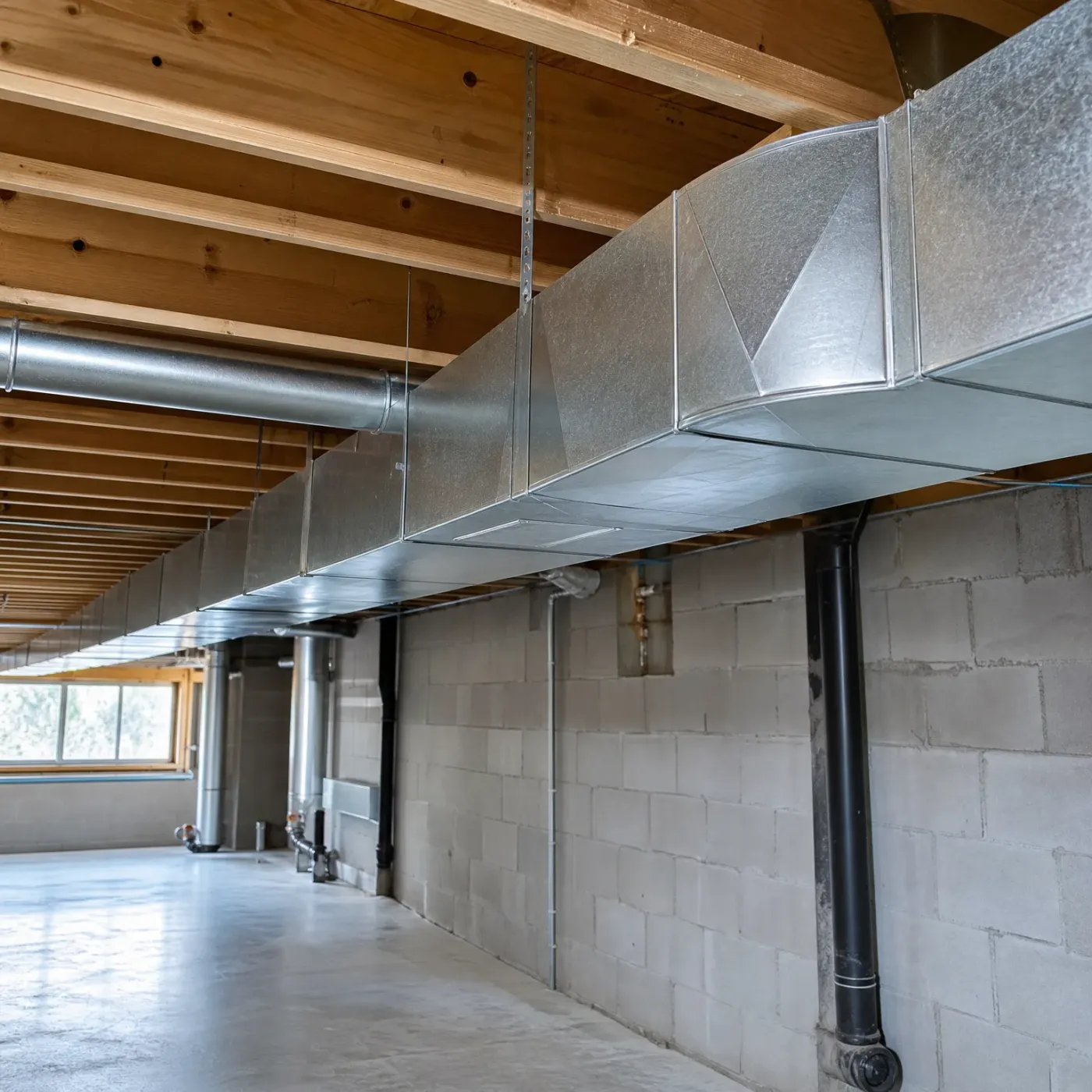
Unfinished basement with galvanized sheet-metal rectangular ductwork and a round duct running beneath wooden floor joists, alongside a concrete block wall with black pipes and a window at the far end.

A pro who works on ducts

The pro who gets in touch is licensed in New York and works in New York County.

Your request goes to a New York County pro who takes ductwork jobs.

Get a licensed local pro

Asking costs nothing, and the choice to hire stays yours.

Leave It or Clear It Out

Skip the cleaning

  • Dust already past the filter keeps circulating through the same joints and seams every time the furnace or AC kicks on.
  • A blower wheel caked with dust throws more of it into the airstream with each cycle, not less.
  • Homes with ductwork from 1951 or earlier have had decades to build up a coating that a filter swap never touches.
  • The vents keep smelling faintly stale or burnt because what is sitting in the ducts gets heated or cooled along with the air.
  • Shelves and sills keep filming over within days since the source is inside the walls, not in the room itself.
  • Nothing in the duct path changes, so the pattern you are living with now continues through next winter and next summer.

Get the ducts cleaned

  • Clearing the buildup off the duct walls and the blower wheel means less of it has a way back into your rooms.
  • A clean blower wheel pushes air the way it was built to, without flinging loose dust into the stream.
  • You get a straight answer from a local contractor who services this kind of equipment through a New York County winter and summer.
  • One contractor takes on the job, so you are not fielding calls from several companies about the same ductwork.
  • A contractor who knows older duct joints and seams can tell you what condition yours are actually in.
  • The dust that was riding the airstream stops getting put back into the same spot you just wiped.
Empty basement with bare concrete walls and floor, a small window at left, and exposed wood joists with galvanized sheet metal ductwork and pipes overhead.

Ducts running clean

This is what a duct run looks like when it's not feeding dust back into your rooms. The metal stays bare, the seams stay sealed, and the gas lines and flex pipe sit alongside it undisturbed. Air moving through picks up nothing extra on the way to your vents.

Dusty sheet-metal HVAC ducts with a rectangular vent register run beneath wooden floor joists above an empty concrete-walled basement.

Ducts coated inside

This is the buildup sitting on your ductwork right now, out of sight above a basement or crawl space. Every seam and joint along that run holds a layer of dark grime, and the joists above it carry the same film. Each time the blower kicks on, some of it moves with the air.

Why does dust come out of the vents when the heat first kicks on?

The furnace sits idle for stretches once the weather warms up, and dust settles on everything inside the cabinet and the ducts closest to it during that time. The first cold morning you turn the heat back on, you notice a puff of dust at the vent, sometimes with a burning smell. You want to know if that means something is wrong or if it's just what happens when the system starts back up after months off.

It's dust that settled during the months the system sat idle

Nothing moved through the ducts while the AC ran all summer and the furnace sat off. Dust drifted down and settled on the burner, the heat exchanger, and the duct walls closest to the furnace. The first time heat kicks on for the season, that dust burns off the hot surfaces and gets pushed out through the vents with the airstream. It usually clears within a few minutes. If it happens every time the furnace cycles on, not just the first run of the season, that points to dust built up further along the duct run or on the blower wheel itself, getting thrown into the air with every cycle rather than just the first one after a long break.

A woman wrapped in a thick cream knit blanket sits in a chair with an open book on her lap, beside a lit table lamp and a frost-covered window at night.
An older woman in a cream knit sweater smiles while looking off-camera in a warmly lit kitchen, with a round loaf of bread on a wooden board in the foreground and a dark window behind her.

Power here costs 36.97 cents per kilowatt-hour

At 36.97 cents per kilowatt-hour, running a blower longer than it needs to costs you more here than almost anywhere else. A blower pushing air through ducts caked in dust works harder to move the same amount of air, and you pay for that extra runtime on every bill.

EIA-861 2025

A man in a dark polo shirt and cap, seen from behind, walks up a paver path toward a woman standing in the open front doorway of a single-story stucco and stone house.

Your house is dusty because the ducts are still feeding it back to you

The dust isn't coming from nowhere. It's riding the air your furnace and AC push through ducts that have been collecting it for years, and it keeps landing on the same shelf you just wiped. Cleaning that path out is what stops the cycle, not another pass with a rag.

A contractor who works on duct systems in Manhattan buildings knows where this kind of buildup sits and what shape it takes in a system like yours. Getting matched with one means someone local looks at your actual ductwork, not a general description of the problem, and reaches out to talk through what they find.

A living room corner with a beige upholstered armchair holding navy and striped cushions, a small round wooden side table with a carved bowl and a potted green plant, a framed landscape picture on a pale wall, built-in shelving, and a curtained window.
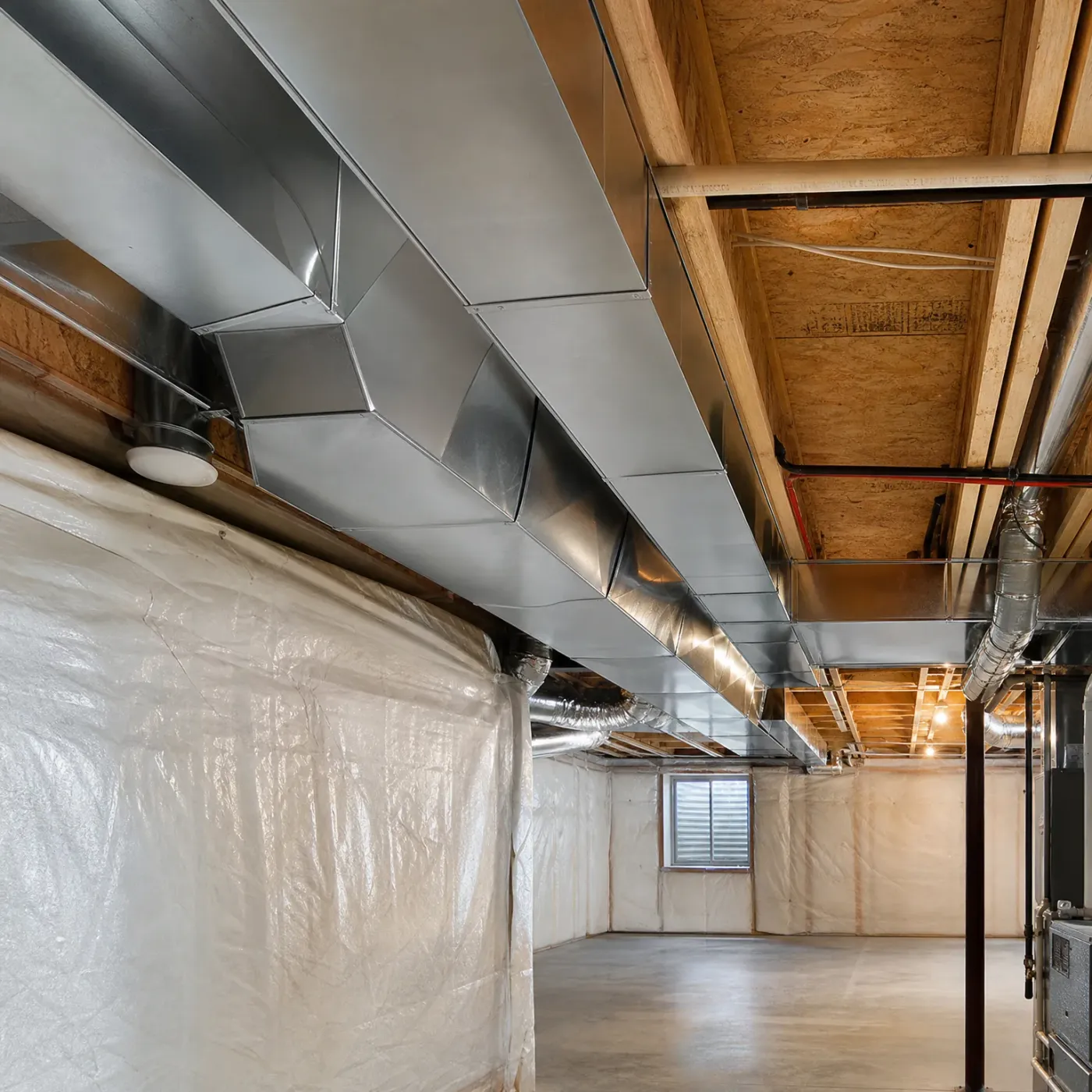
Unfinished basement with exposed wood floor joists, large sheet-metal HVAC trunk ducts, flexible insulated ducting, plastic sheeting over insulated walls, a small window, and a concrete floor.

Get your ductwork to the right pro

Connect with a pro

A licensed pro who works in New York County gets your request.

No fee to send it, and nothing to sign.