Profile view of a bearded man wearing a dark baseball cap and a dark gray T-shirt against a plain off-white background.

Why your house is so dusty in New York

Duct and vent cleaningDucts or ventsNew York
Step 1 of 2

What ZIP code is the job in?

Why is my house so dusty all the time?

You vacuum and dust on a regular schedule and it still comes back in a couple of days, settling on the windowsills and the TV stand again like you never touched it. In a New York house with a duct system, the air moving through your home all day is doing more to spread dust around than anything tracked in from outside.

Your ducts are circulating it

Every time your furnace or AC runs, air pulls through the return ducts, past the filter, and back out into every room. If the ducts themselves are coated in dust, or the filter isn't catching what passes through, that system is handing dust back to your house all day instead of removing it. Gas furnaces here run hard from October through April, and with summers as sticky as they are, the AC is working right behind it most of the rest of the year. That means the air in your home is moving through those ducts almost constantly, and whatever is sitting in them gets carried along with it every single time.

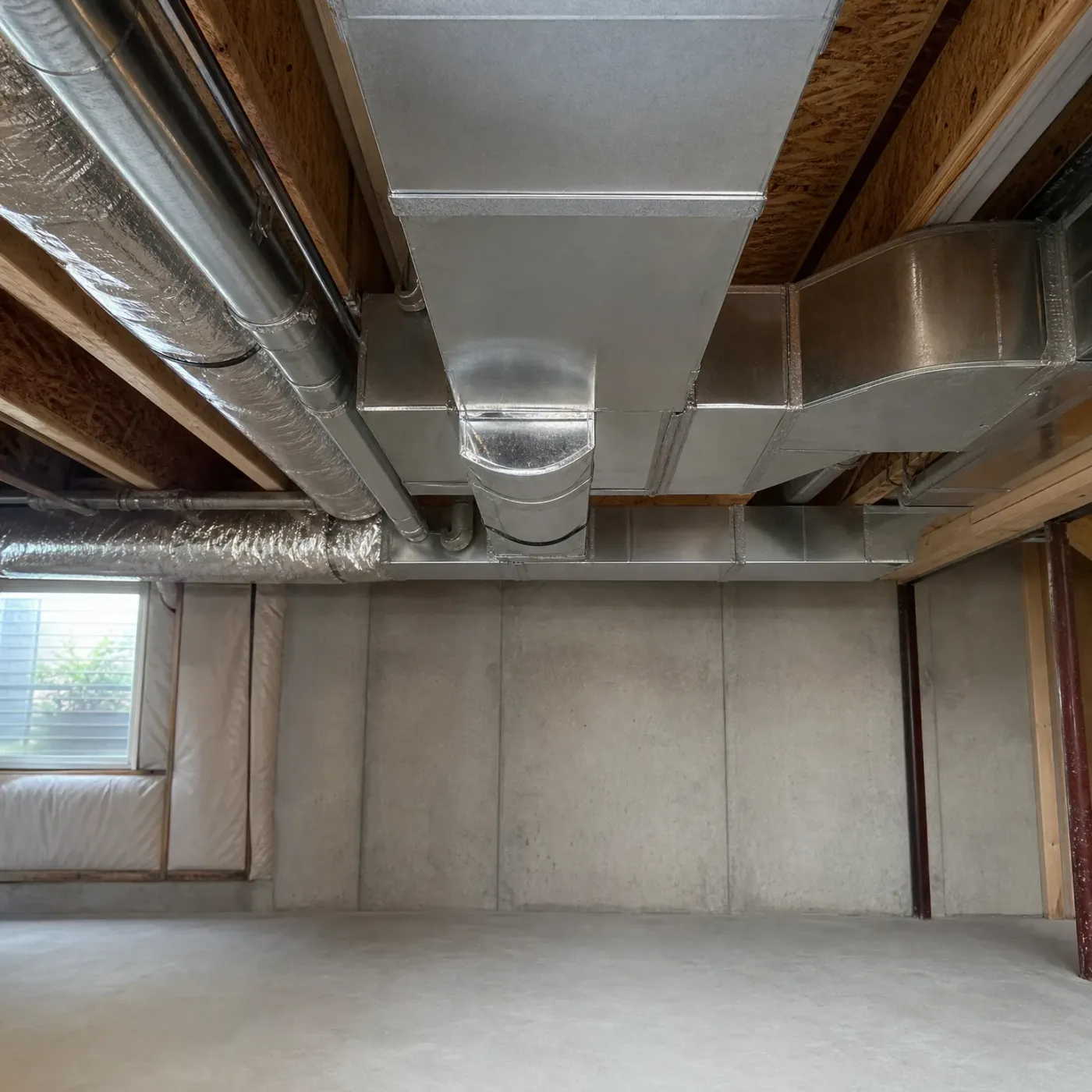
Unfinished basement with galvanized sheet-metal ductwork and pipes beneath wood joists, a gray furnace unit at left, insulated plastic-covered walls over a concrete foundation, and a bare concrete floor.

Ducts moving clean air

This is what a duct system looks like when it's doing its job. Air moves through sealed metal runs, through the filter, and into the rooms without picking up anything along the way. No film on the furniture a day after you dust.

Empty concrete-walled basement room with galvanized rectangular and round HVAC ducts and pipes running along the exposed wood-joist ceiling.

Ducts spreading dust through every room

Loose joints and leaky seams let ducts pull in air from the basement itself, concrete dust, fiberglass, whatever settles down there, and push it out through every vent upstairs. A filter can only catch what actually passes through it.

A smiling woman with long dark hair in a gray sweater sits behind a white countertop holding a glass of red wine, with a dimly lit living room and dark kitchen island in the background.
A woman in a beige knit sweater with her hair up laughs while looking to the side, seated in a dimly lit living area with a sofa, windows and a kitchen counter behind her, a glass of red wine in the lower right foreground.
A woman in a black sweater laughs while seated at a light stone counter with a glass of red wine, in a dimly lit living and dining room with bookshelves, a table lamp and framed artwork behind her.
A smiling woman with long dark hair in a beige sweater sits at a granite counter with a glass of red wine, with a living room, fireplace and dining area behind her.

A duct system works in a loop. Return grilles pull air out of the room, through the filter, and back to the furnace blower, which pushes it out again through the supply ducts. That loop is supposed to stay closed. When a joint has come apart somewhere in the attic or crawl space, the system pulls in whatever is sitting up there instead of just the air in your room. A filter that's overdue works against you too. Once it's caked with what it's already caught, air finds the path around the edges instead of through it, and that unfiltered air carries dust straight back into your rooms. Anything that makes the blower work harder, a clogged filter, a crushed run, raises the static pressure in the system, and a blower under that kind of strain pulls harder through every gap it has. In New York, that blower is cycling on and off all winter long, so a loose duct gets plenty of chances to feed dust into the air you're breathing.

How Dust Moves Through Your Ducts

  • Return air pulls household air through the filter before the furnace blower pushes it back out through the supply ducts.
  • A gap where a duct joint has separated pulls air from the attic or crawl space instead of the room you're trying to heat or cool.
  • A filter that's done its job is caked enough that air starts bypassing it around the edges rather than through the media.
  • Static pressure builds when a filter is too restrictive or a duct run is crushed, and the blower pulls harder through any gap it can find.
  • The furnace blower cycles on and off all day during a New York winter, and each cycle is another chance for loose duct dust to move.
  • Supply registers blow air into a room while return grilles pull it back, and dust settles heaviest near whichever one is closest to where you sit.
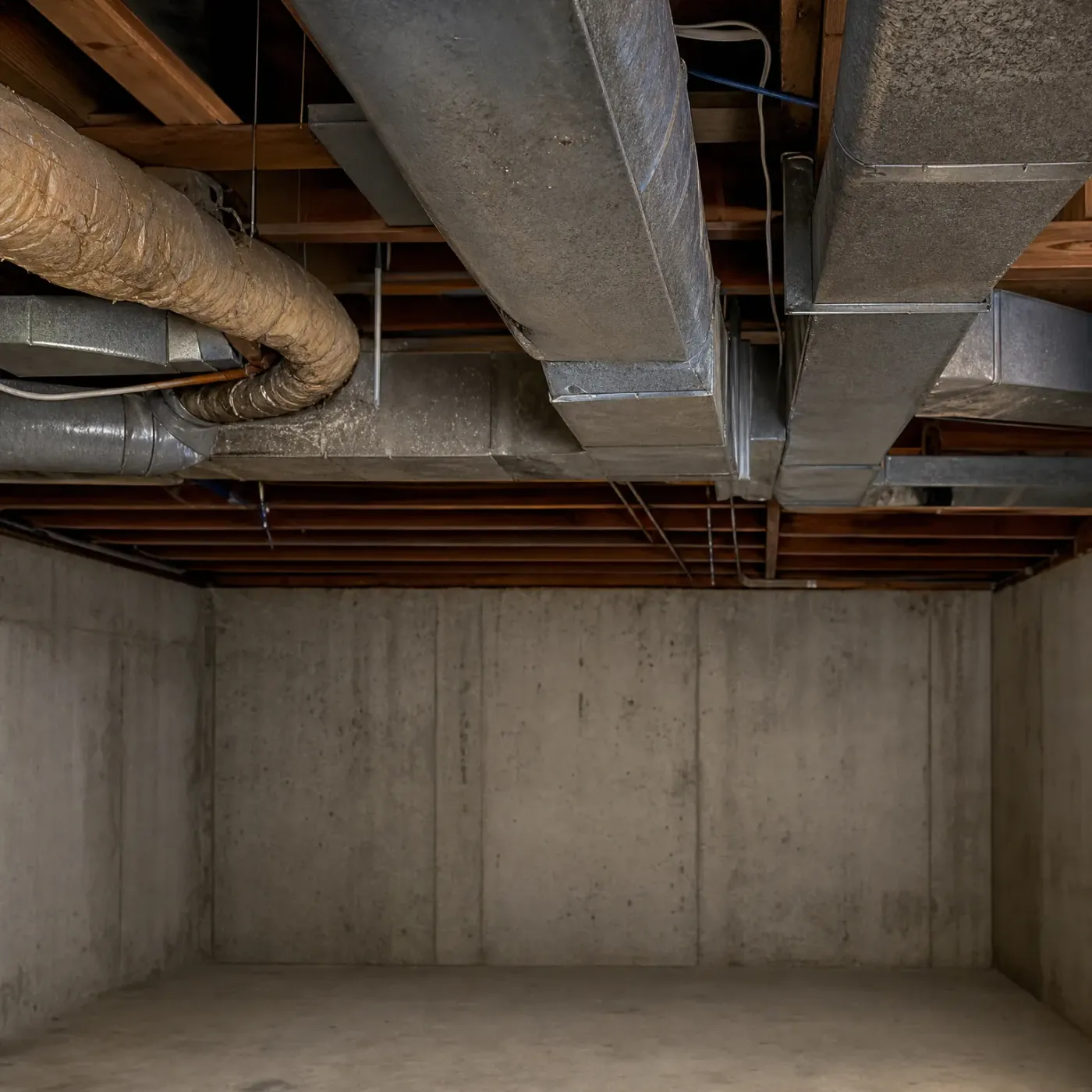
Empty basement room with bare concrete walls and floor, with exposed wooden joists, sheet-metal HVAC ducts, an insulated flexible duct, and pipes running across the ceiling.
Before you get your ductwork cleaning
Empty unfinished basement with bare concrete walls and floor, showing galvanized sheet metal ductwork, insulated flexible duct, and pipes running along the wood-framed ceiling, with a small window at left.
After you get your ductwork cleaning

No phone calls to make

Only one pro gets your request, so you hear from one company.

No charge to send it. You decide if you hire them.

A furnace blower in a gas system runs for long stretches once it kicks on, and every minute it runs it's pulling return air through gaps before that air ever reaches the filter.

Air from an attic or crawl space carries more than regular room air does, so dust that bypasses the filter settles faster and in more rooms than dust that gets caught the way it's supposed to.

Power costs 26.39 cents per kilowatt-hour statewide

At 26.39 cents per kilowatt-hour, that blower isn't cheap to run. A furnace blower straining to push air through ducts clogged with dust pulls harder and runs longer to do the same job, and you pay for every extra minute.

EIA-861 2025 statewide residential average

Where the dust is coming from

  • Dust that resettles within days usually means your return air is picking up more than household air before it reaches the filter.
  • A gap in a duct joint or a loose connection keeps feeding attic or crawl space air into your system no matter how often you clean.
  • Clearing that buildup is a job for someone who works on duct systems in New York homes all year and knows where joints tend to separate.
  • A local contractor can look at your specific duct runs instead of treating the symptom you see on the windowsills.
  • Going through one licensed contractor means one visit and one assessment, not several companies asking you to describe the same problem.

The dust on your windowsills isn't bad luck and it isn't you falling behind on cleaning. It's air finding a way into your ducts before it ever reaches the filter. A gap at a joint, a connection that's worked loose over the years, a seam that's separated in the attic or crawl space: any of these lets in air that was never meant to circulate through your rooms, and your filter never gets the chance to catch it first. You can vacuum every day and the film still comes back, because the source isn't the room. It's the duct run feeding it.

Finding that gap means going through the actual runs in your house, not guessing from the symptom. That's work for someone who does it on New York duct systems all year and has a sense of where joints tend to fail first, in a furnace system that runs hard through the winter and keeps working through a muggy summer. A contractor who already knows that pattern isn't starting from zero when they look at your ducts.

Request a cleaning through this page and one licensed, local contractor takes it from there. Not three companies calling to ask you to describe the dust problem a third time, not quotes to sort through side by side. One assessment, from someone who can tell you what they find in your ducts specifically, and what it will take to stop feeding that air into your rooms.


A covered porch with a wood front door with six upper glass panes, a lantern wall sconce, tapered column on a stone base, potted ferns and flowers, a woven doormat, and wide steps leading to a paver walkway bordered by shrubs and white hydrangeas.
A beige upholstered sofa with a cream cushion and chunky knit throw sits beside a white-framed window, with a leafy potted plant in a stone vase against a tan wall.
Sunlit corner of a room with a linen curtain beside a window, built-in shelves holding ceramic vases, wooden bowls, a potted green plant, stacked books and a woven basket, above a textured rug.
A dark wood three-drawer dresser against a pale wall holds a tall ceramic vase with leafy branches, stacked books and a shallow bowl, with a framed print above, a woven basket on the wood floor at left, and an upholstered sofa with a green pillow in the foreground.
A cream upholstered sofa with a textured ivory cushion and a rust-colored cushion sits beside a window with sheer linen curtains, with a potted leafy plant behind it and a wooden bowl on a wood table in the foreground.

One form, no calling around

Your request stays with one local pro.

Find a licensed pro

There's no charge for the request.