One filter check a season isn't enough
Furnaces run from October through April here. A filter can load up with dust well before the next scheduled change, pushing more of it straight through the ducts.

One form, no calling around
Dust coming out of your vents usually traces back to the furnace itself, not just a dirty house. It can mean a clogged filter, a crack in the duct, or something inside the system stirring up what settles in it over the winter. This page walks through the common causes, so you know what's worth a look before you spend time calling around and explaining the same thing to every contractor you find.
Start one formDust blowing out of your vents usually means the filter isn't catching what it should, or something inside the furnace is pushing more into the air than normal. A filter that's clogged or the wrong size lets air bypass it instead of through it, so dust gets pulled back into the system and out through your registers. A crack in the ductwork does the same thing, drawing in dust from the basement, attic, or wherever that duct run passes through. Heat exchangers and blower compartments also collect dust over the months a furnace sits unused, and the first weeks of fall heat in New York stir that loose dust into the air moving through your house. If the dust keeps showing up after you've changed the filter, the cause is further inside, in the ductwork or the furnace cabinet itself, and that's worth having someone look at before the dust finds its way into the rest of the house.


Furnaces run from October through April here. A filter can load up with dust well before the next scheduled change, pushing more of it straight through the ducts.
Dust and lint build up on the blower wheel itself. Once that happens, it throws dust into the air on every cycle, no matter how clean the filter is.





This is what sits behind a quiet winter. The filter is seated right, the blower wheel is clean, and air moves through the ducts the way it was designed to. Nothing extra gets pushed out when the furnace kicks on.

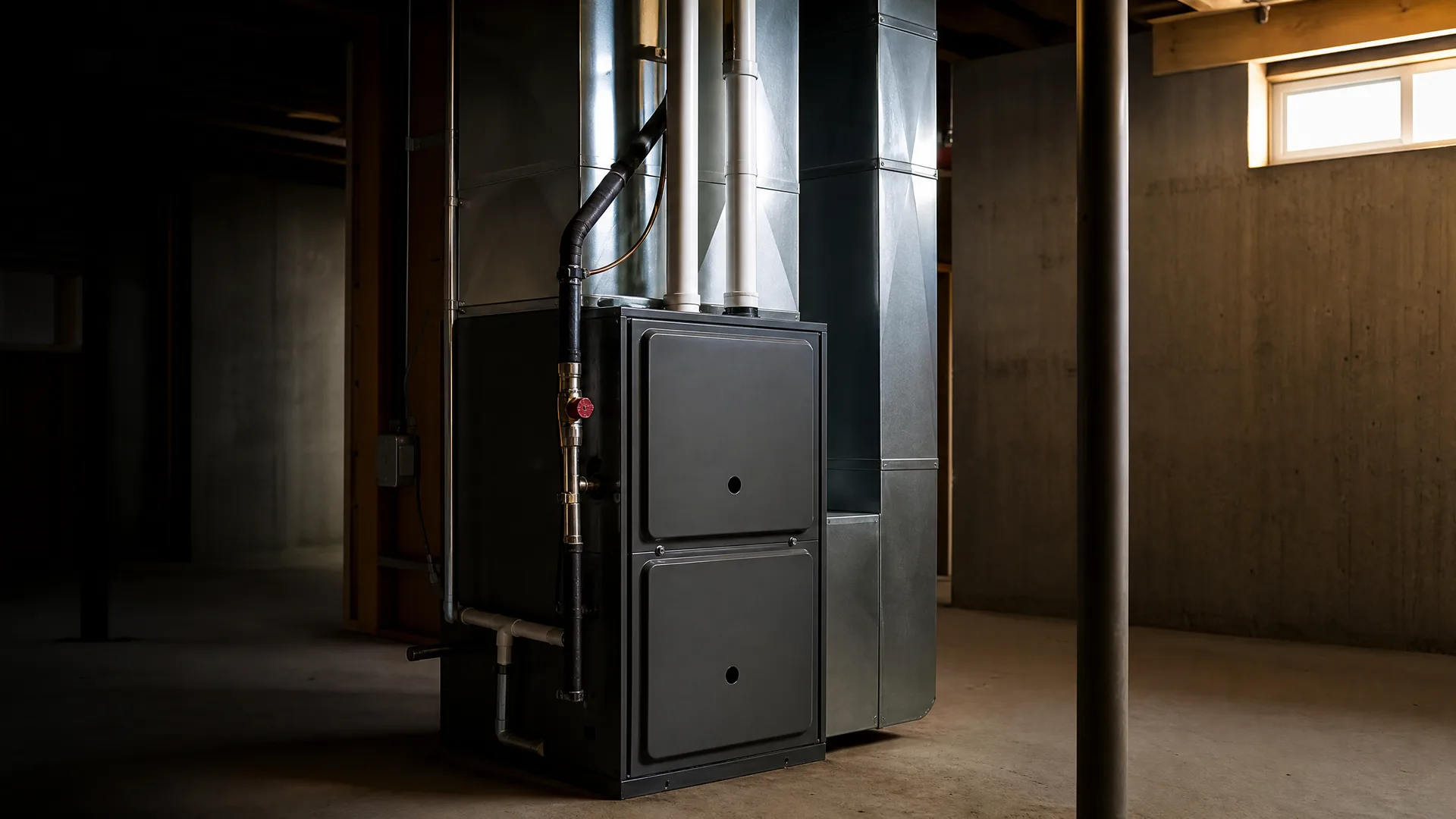
A furnace like this has had years to collect what settles inside it. Surface rust on the cabinet doesn't stop it from running, but a blower wheel caked with dust will scatter some of it into the ducts every cycle, all winter long.
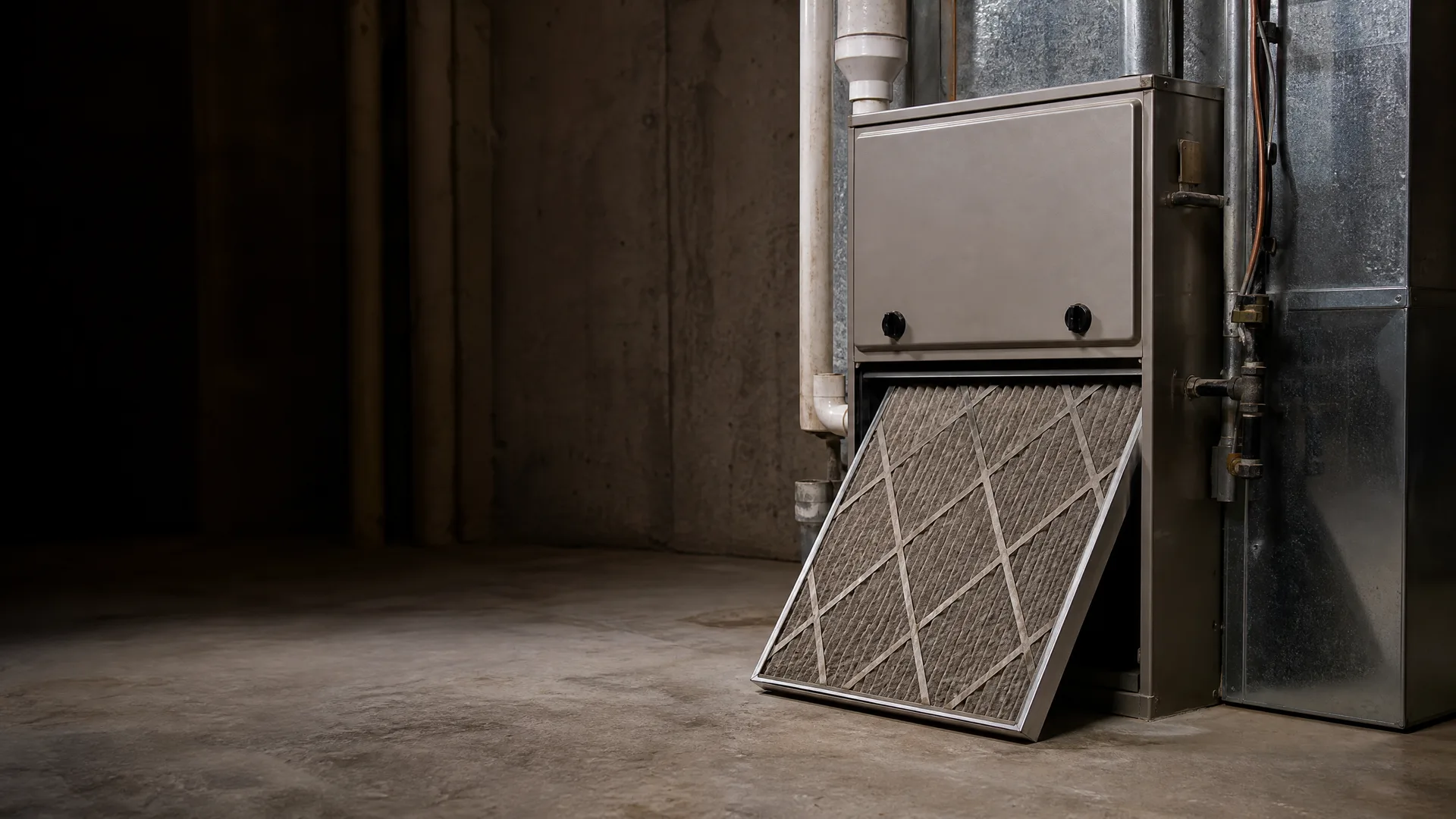
You're down in the basement on a Saturday afternoon in October, the first cold snap pushing you to turn the furnace on for the season. You pull the filter to check it before winter really sets in, and it slides out gray, matted with dust, heavier than it should be. You hold it up to the bare bulb and can't see light through half of it. The air coming off the return vent nearby carries a faint dusty smell. You think back and can't remember if you changed this one in the spring or just meant to. Behind the filter, the blower housing has a fine gray coat on it too.
The pro who reaches out is licensed in New York.
Asking costs nothing, and the choice to hire stays yours.

You can pull the filter and hold it up to the light every few weeks, order the right size online, and track when the blower last got looked at. It takes remembering to do it on top of everything else running your house, and if something's wrong inside the cabinet, like a crack in the heat exchanger or a wheel caked with dust, you won't see it from where you're standing.

A contractor who works on furnaces all winter in New York knows what tends to fail after a few years of October through April runs, and checks the parts you can't see from the basement stairs. One licensed tech handles it, so you're not fielding calls from three companies to find out the same thing. You still have to let them in the door, but the guessing about what's wrong stops being yours to do.
You notice it's not random. Every time the furnace cycles on, there's a puff of dust from the vents, then it settles until the next cycle. That pattern points at something specific happening inside the furnace each time it fires, not just dust sitting in the ducts waiting to be disturbed.
The blower wheel pushes air through the whole system every time the furnace runs. Dust and dirt build up on its blades over a winter of use, and once there's enough of it, pieces break loose and ride the airstream straight into your ducts. That's why it happens on every cycle instead of once. A clogged filter makes it worse by letting more unfiltered air reach the blower in the first place, but the wheel itself is usually what's actually launching the dust. Furnaces here run from October through April, so a blower that picks up dirt in November has months left to keep spreading it before the system shuts down for the season.


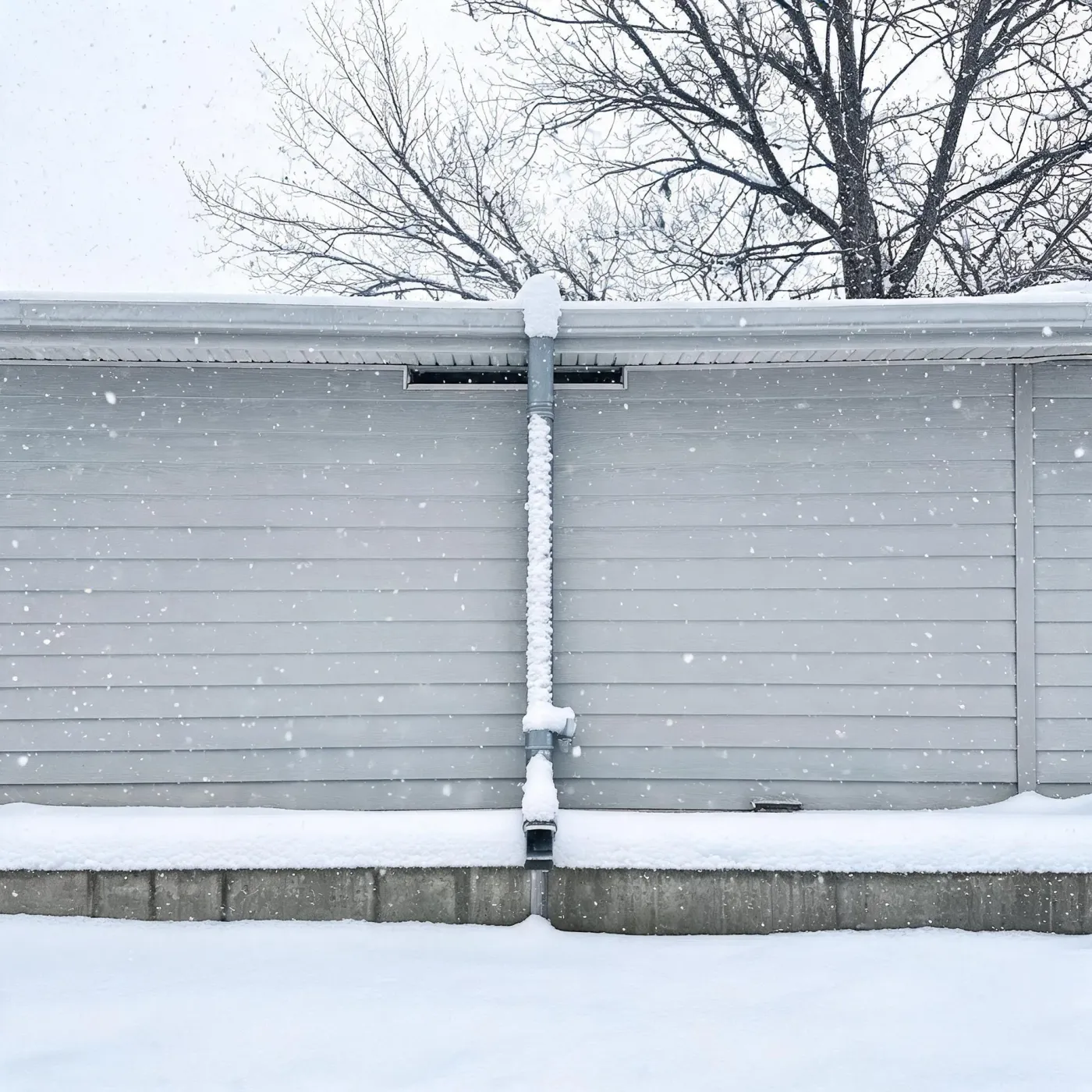
Winter nights average 24°F across New York, according to NOAA climate data. That kind of cold keeps your furnace cycling on and off most of the night instead of running steady, and every cycle pushes another puff of air through the blower and the filter. If the filter's loaded up or the blower wheel's coated, those repeated cycles are what you're seeing come out of the vents. A furnace that only ran a few times a night wouldn't move enough dust to notice. One that's firing all night, every cold night from October through April, will.
NOAA nClimDiv 1991-2020 county normals weighted by homes


Cold air pulls through the return and hits the filter first.
A clogged or ill-fitting filter lets dust bypass straight through.
The blower wheel spins and pushes that air into the ducts.
Dust riding the airflow blows out through your vents.
At 24°F overnight, your furnace is cycling on and off most of the night rather than holding a steady temperature. Each cycle is another push of air through the filter and the blower wheel, and if either one is dirty, another puff of dust out your vents.
NOAA nClimDiv 1991-2020 county normals weighted by homes
Dust from your vents has a source inside the furnace, and by now you have a good idea where to look. A clogged or ill-fitting filter, a blower wheel caked with dust, rust working through the cabinet, a crack in the duct. One of those is pushing the dust that settles through your house every time the furnace cycles, and at 24°F overnight, this winter, it's cycling often.
A contractor who works on furnaces all winter across New York has opened up cabinets like yours more times than you have. They know a worn blower wheel when they see one, and they know what a filter looks like when it's been letting dust bypass for weeks instead of catching it. That's not a guess made from across town. It's someone who services this equipment every season, in houses that run the same gas furnaces through the same cold, pulling the same filters out gray and matted.
Working with one contractor also means one visit covers it. No explaining the problem three times to three different companies, no sorting through quotes that don't agree with each other because nobody looked at the same furnace. One person comes, looks at your blower wheel and your filter and your ducts, and tells you what's actually happening in your system.
The furnace will keep cycling through April either way. What gets fixed now is what each of those cycles pushes into your air.
Skip the calls to every shop