
Signs of leaky ductwork in Brooklyn, NY
Find a pro near meYou noticed a room that never gets quite warm enough, or an attic duct joint you could feel air leaking from. Maybe the bill jumped and the house didn't feel any different for it. In Kings County, where gas heats most homes and power costs what it does here, air escaping through a split seam or a loose connection before it reaches the room is money going into the attic or the crawlspace instead of your living room. Figuring out which runs are losing air and where takes someone who can get into the ductwork and look, not a guess from the thermostat. Tell us what you're noticing and where, and you'll be matched with a contractor who works on duct systems in your area. They'll reach out to you directly. From there, finding the leak and deciding what to do about it is off your plate.
A room that stays cold no matter how high the heat is set, a duct in the attic or basement you can feel air coming from, a furnace that runs long stretches without catching the house up. These are the signs of leaky ductwork. It happens at the joints and seams, where sections of duct meet and the tape or mastic sealing them has aged or let go. Air you paid to heat or cool escapes into the attic, the basement, the space between floors, instead of reaching the room it was meant for. With gas heat running through a Brooklyn winter, that lost air is lost heat, and the furnace keeps running to make up for what never arrived. The rooms farthest from the furnace usually show it first, and a bill that climbs while the house feels the same is often the clearest sign of all. A contractor can find the leaks with a pressure test and seal them at the source.




Why does ductwork here leak in the first place?
Half the homes here were built by 1944
Half the homes in Kings County were built in 1944 or earlier, so if yours is one of them, the ducts may have had decades to work loose at the joints.
Heat runs October through April
Heat runs here from October through April, about seven months. Any leak in that run pulls heated air into the attic or basement for most of the year.
Cooling runs June through September
Cooling runs June through September. A leaky duct working against the heat and humidity those four months shows up fast as a room that won't cool down.
ACS 2020-2024 · NOAA nClimDiv 1991-2020
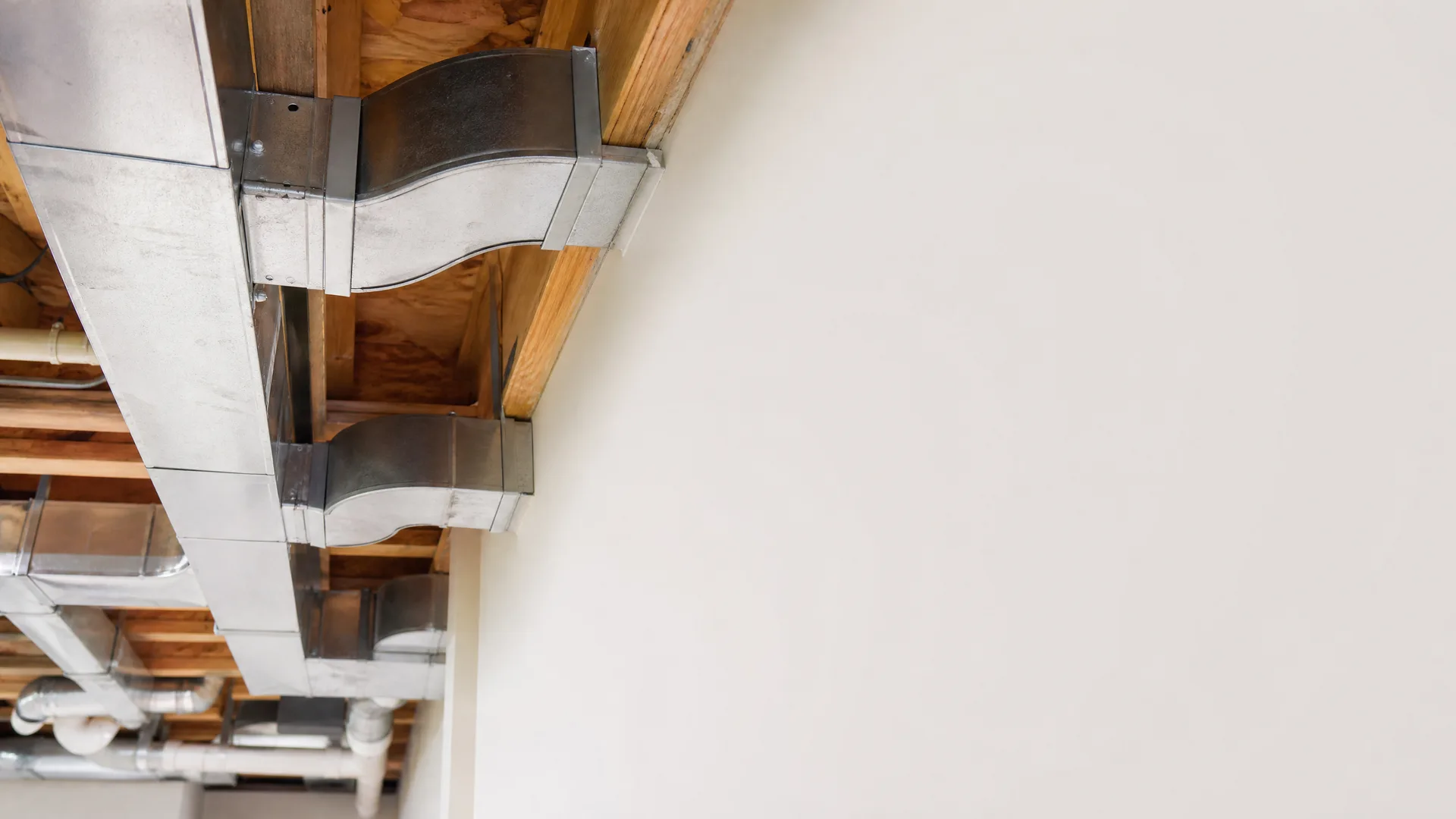
Check the attic or basement
Walk the ducts where you can reach them, in the attic or basement, and look at the joints. Leaking ones show a gray or black smudge of dust around the seam, where air has been forcing its way out and pulling dust with it. Hold your hand near a seam while the furnace runs. If you feel air moving outside the metal, that joint has opened up and is sending heated air into the attic instead of your rooms.
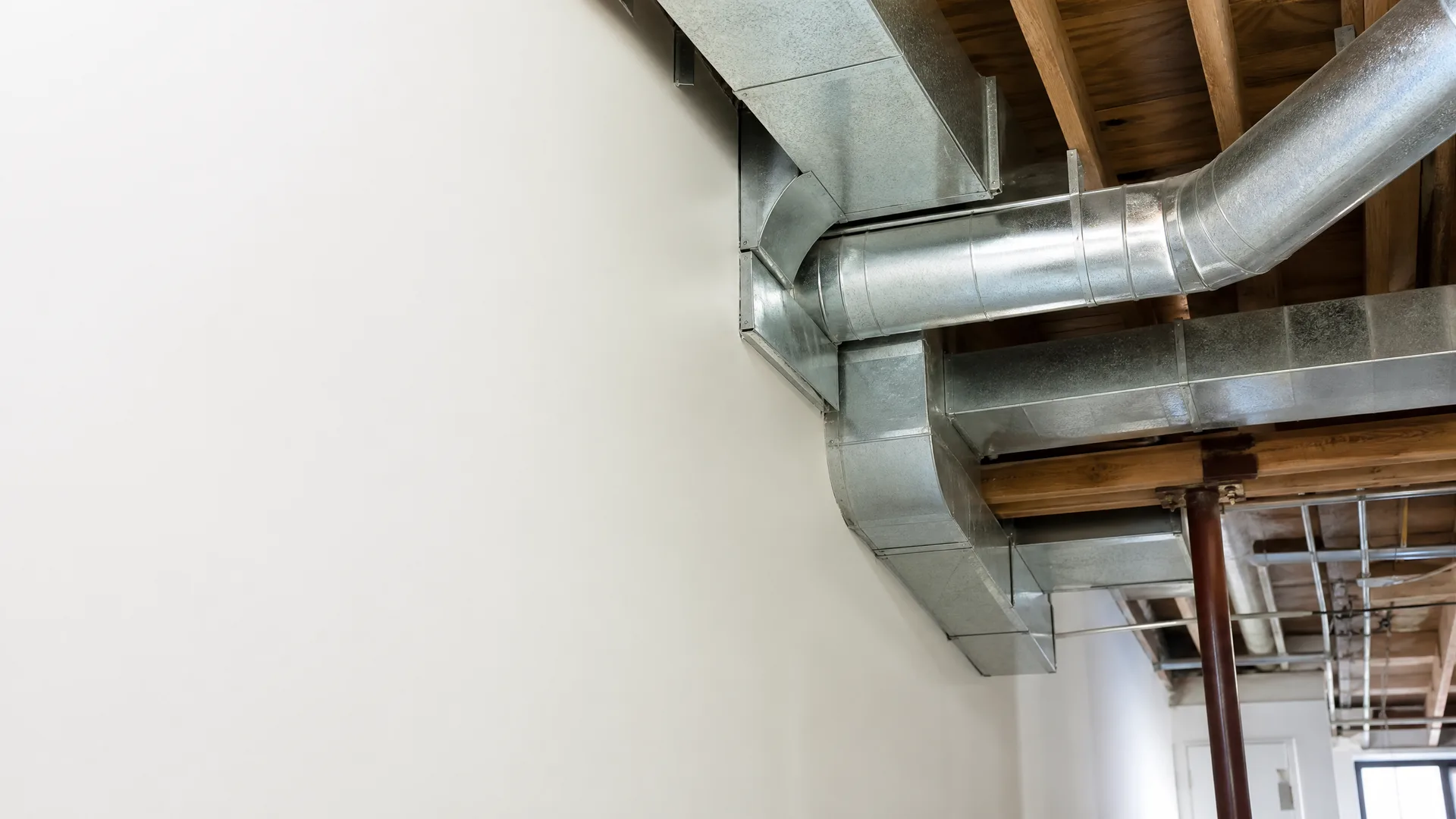
Check what the rooms tell you
Go room to room while the furnace is running and compare how warm each one feels. A bedroom at the far end of a duct run that stays noticeably cooler than the room next to the thermostat points to a leak somewhere between the two. Shut doors and check return vents too. A duct losing air along the way can't deliver what the furnace is putting out, no matter how long it runs.

What a leak is costing your house
If one bedroom never quite gets warm in January, that's not the thermostat's fault. Air meant for that room is landing in your attic or your basement instead, and the furnace keeps running to make up for it. That shows up as a gas bill that climbs past what the thermostat setting should explain, and a house where the first floor feels fine while the back bedroom doesn't.
It also means your furnace works harder for less, pulling in attic or basement air through the same gaps it's losing air from, which carries in dust and sometimes a damp basement smell through the vents. A contractor who knows Kings County duct runs can find where a system is losing air and tell you what sealing the leaks would actually take in your house, rather than you guessing room by room.



Find a duct system cleaning pro in Kings County
A leak you can feel in the attic is easy to put off. The ones you can't feel are the ones running up the bill every month from October through April. By the time a room's cold enough to notice, the duct feeding it has probably been losing air for years. Finding every leak means getting into the attic and basement with the furnace running, checking each joint by hand, and most homeowners don't have the time or the ladder work for that on a weekend. A contractor who does this in Kings County knows where these systems tend to separate first and can seal what's actually leaking instead of guessing. Sending the request means someone with the right tools takes it from here. You stop losing conditioned air into your attic, and you stop paying to heat a room that was never going to get warm anyway.
What You Now Know
- A room that won't hold heat, a dust mark at a duct joint, and a furnace that runs long are the three signs worth checking.
- None of these need a crawl through the attic to confirm if you'd rather have someone else look.
- The furnace isn't broken when ducts leak, it's just heating your attic or basement along with your house.
- Sealing the joints that are actually leaking costs far less than replacing ductwork that's otherwise sound.
- A contractor can find the leaks you can't see or reach and tell you what's worth fixing.
- Once you send the form, finding that contractor is off your plate, not something you have to chase down.
A cold room, a smudge at a duct joint, a furnace that won't quit running. Any one of those points the same direction. The ductwork is losing air somewhere between the furnace and the vent, and the house is paying for it twice, once in comfort and once on the bill. You don't need to find the exact joint yourself. A contractor who does this for a living can trace the system end to end, find where the air is actually going, and tell you whether it's a seal job or something bigger. Most of the time it's the former. Ducts rarely need full replacement just because a few joints have opened up over the years, and sealing those joints is a far smaller job than tearing out and redoing the runs. What you're really deciding here isn't whether to live with a cold room through another winter. It's whether to keep heating your attic or your basement along with the rooms you actually use. That decision gets easier once someone's looked at the ducts directly instead of guessing from the thermostat. Send the form and that part of it, finding the right person to come look, stops being something you have to manage. It moves to someone else's list, not yours. You've already done the part that mattered: noticing the room, the mark, the furnace that won't shut off. The rest is a phone call away from being someone else's job to sort out.

Ductwork Cleaning
The right pro for this job

- Get matched with someone who does this kind of work in Kings County.
- Describe your ductwork job, and a local pro who handles it gets in touch.

- One request and the duct cleaning stops waiting on you.
- Once you send the form, finding a pro is off your list.

- One form replaces the calls you'd make to find a duct system pro.
- Skip calling around for someone who cleans ducts.

- The pro who gets in touch is licensed in New York and works in Kings County.
- A licensed pro who works in Kings County gets your request.