

Live with it
The musty smell stays. Spores keep circulating through the supply runs every time the air handler kicks on, landing on furniture and in rooms farthest from the unit.
Send the form and the duct cleaning stops sitting on your list.
Hand it offYou keep smelling something musty when the air handler kicks on, or someone in the house has been sneezing more than usual indoors. With Lindenhurst summers as sticky as they get, that damp smell after the AC runs is the kind of thing worth taking seriously rather than waving off as an old house smell.
Mold needs moisture, and a duct system handling Suffolk County's humid summers has plenty of it. Condensation forms around the cooling coil and the nearby ductwork, and if that moisture sits instead of draining off, mold can take hold on the inside surfaces. A smell that shows up specifically when the AC starts, rather than all the time, points to the ducts or the coil rather than somewhere else in the house. Dust that looks darker or damper than usual coming from the vents is another sign. So is anyone in the house having more trouble breathing indoors than outdoors, especially during the stretch from spring through early fall when the system runs hardest.

Mold needs moisture to grow, and a duct system that's cycling cool air through warm, damp summer air is a likely place for condensation to form. Any spot where moisture sits, inside the ducts, around the air handler, near a drain pan, gives mold the conditions it needs. The musty smell is the first sign most people notice, but by the time you smell it, the growth has usually had time to spread along the duct walls.
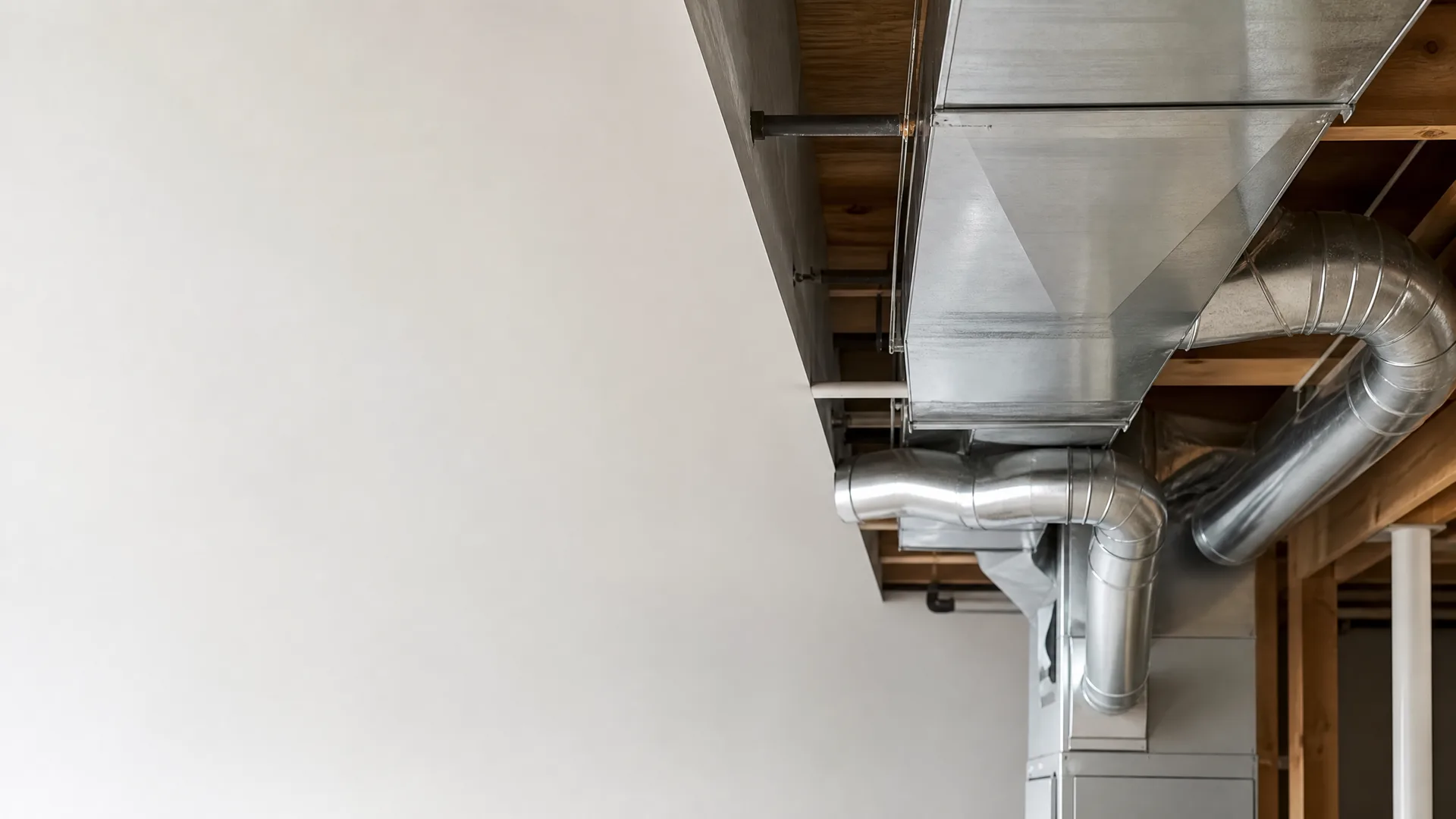
A duct cleaning clears built-up dust, debris, and mold growth from the supply and return lines, the air handler cabinet, and the coil area if it's accessible. It does not seal leaks or fix humidity problems on its own. If the moisture source behind the growth isn't addressed, whether that's a duct leak, a drainage issue, or just a long muggy stretch, mold can return even after a thorough cleaning.

Spring finally lets you open the living room windows, and the afternoon sun catches the ceiling vent grille over the couch. That's when you notice it, a gray fuzz of dust along the slats, and the same dust settled on the lamp table and the arm of the couch underneath. You run a finger along the grille and it comes away dark. The air handler hasn't kicked on much yet with the mild weather, but the dust is already there, sitting on everything in its path. You look up at the vent again and wonder how long it's been doing that, and what's been riding along with the dust every time the air moved through that grille all winter.
Half the homes here were built by 1970
Half the homes in Suffolk County were built in 1970 or earlier, and older duct runs and seams are more likely to have gaps where moist air gets in.
Heat runs October through May
Heat runs October through May here, so the system sits idle for long stretches in between, giving mold time to spread undisturbed in the ductwork.
Cooling runs June through August
Cooling runs June through August, and that's when the ducts carry the most moisture, which is exactly the stretch mold needs to take hold.
ACS 2020-2024 · NOAA nClimDiv 1991-2020
You can run the air handler fan on its own to push air through the ducts without cooling the house, and if the musty smell comes back strong within a day, the mold is still in there.
Smell alone won't tell you how far it's spread. A contractor can look inside the ducts and at the coil and drain pan, the places a homeowner can't easily check.




Fill out one short form instead of calling around.
Sending the form costs nothing.
Mold needs three things to take hold in a duct: moisture, a food source, and somewhere quiet to sit. The dust that collects on sheet metal gives it the food. Any fiberglass liner inside the ductwork gives it a place to hold water long after the surrounding metal has dried, which is why liner is harder to clean than bare duct. Once spores are established, the blower doesn't keep them in one place. Air pulled in through the return carries whatever is growing near it through the coil and out into every supply run in the house, so a problem that started in one spot ends up seeding rooms far from the air handler, especially ones with weak airflow to begin with. The evaporator coil adds its own moisture. Condensation forms on the coil whenever the AC runs, and some of that water drips into the duct boot underneath it. That boot can stay damp well after the rest of the system feels dry, which keeps feeding any mold nearby. A clogged condensate line makes this worse, backing water up into the ductwork instead of carrying it outside. A contractor who's checking for mold looks at the drain pan and the condensate line along with the ducts themselves, because a duct cleaning that ignores a backed-up line is treating the symptom and leaving the source in place.


The musty smell stays. Spores keep circulating through the supply runs every time the air handler kicks on, landing on furniture and in rooms farthest from the unit.
A contractor clears the growth from the ductwork so the air handler isn't pushing spores through the house. No more calling around to find someone who'll do it right.
Walk past a supply vent and the smell gets stronger, then fades a few feet away. That's the duct talking, not the room. You might notice it worst in a bedroom that's farthest from the air handler, or in the room you use least. Dust on the grille slats that looks darker or clumped, rather than just gray, is worth a second look. So is a filter that's dirty again only weeks after you changed it. None of this means the whole house is affected. It means air moving through the ducts is picking something up on the way, and until it's cleared out, everyone breathing that air is breathing it too.
A contractor inspects every supply and return run first.
Negative air pressure gets set up to stop spores spreading.
A brush and vacuum system knocks mold loose from the metal.
An antimicrobial treatment goes on to keep growth from returning.

Every time the air handler kicks on, that air moves through the whole house. A bedroom at the far end of the supply run gets the same spores as the living room. Furniture catches dust, and so do the people sitting on it, which is why sneezing and a stuffy feeling tend to show up in rooms that have nothing wrong with them on their own.
Finding someone qualified to deal with this isn't like calling a plumber for a leak. You're looking for a contractor who actually does duct cleaning, not just HVAC repair, and in Suffolk County that search turns up a lot of names that don't specialize in it. Send the form once and that search is done. No calling around, no explaining the musty smell three different times to three different companies, no sorting through quotes that all describe the job differently.

Running a contractor's negative air machine or a dehumidifier during duct cleaning draws on your power, and at 26.13 cents per kilowatt-hour that adds up fast here. It's also a reason to fix the moisture problem in your ducts rather than just the smell, since a system that keeps cycling damp air keeps costing you.
EIA-861 2025
A musty smell from your vents means mold growing somewhere in the duct system, and that doesn't clear up on its own. The air handler keeps pushing spores through every supply run, into every room, for as long as the growth sits there. Cleaning the ducts removes it, and an antimicrobial treatment afterward keeps it from coming back the same way. That's the whole problem and the whole fix. You don't need to guess at how bad it is or open up walls to find out. A contractor can inspect the runs, tell you how far it's spread, and clear it out without replacing anything. The smell, the dust on the furniture, the sneezing in rooms far from the air handler, all of it traces back to what's sitting in that ductwork right now. Get it cleaned and the air moving through your house stops carrying it.


Done looking for a duct system pro
Skip searching for a duct system pro and answer a few questions instead.