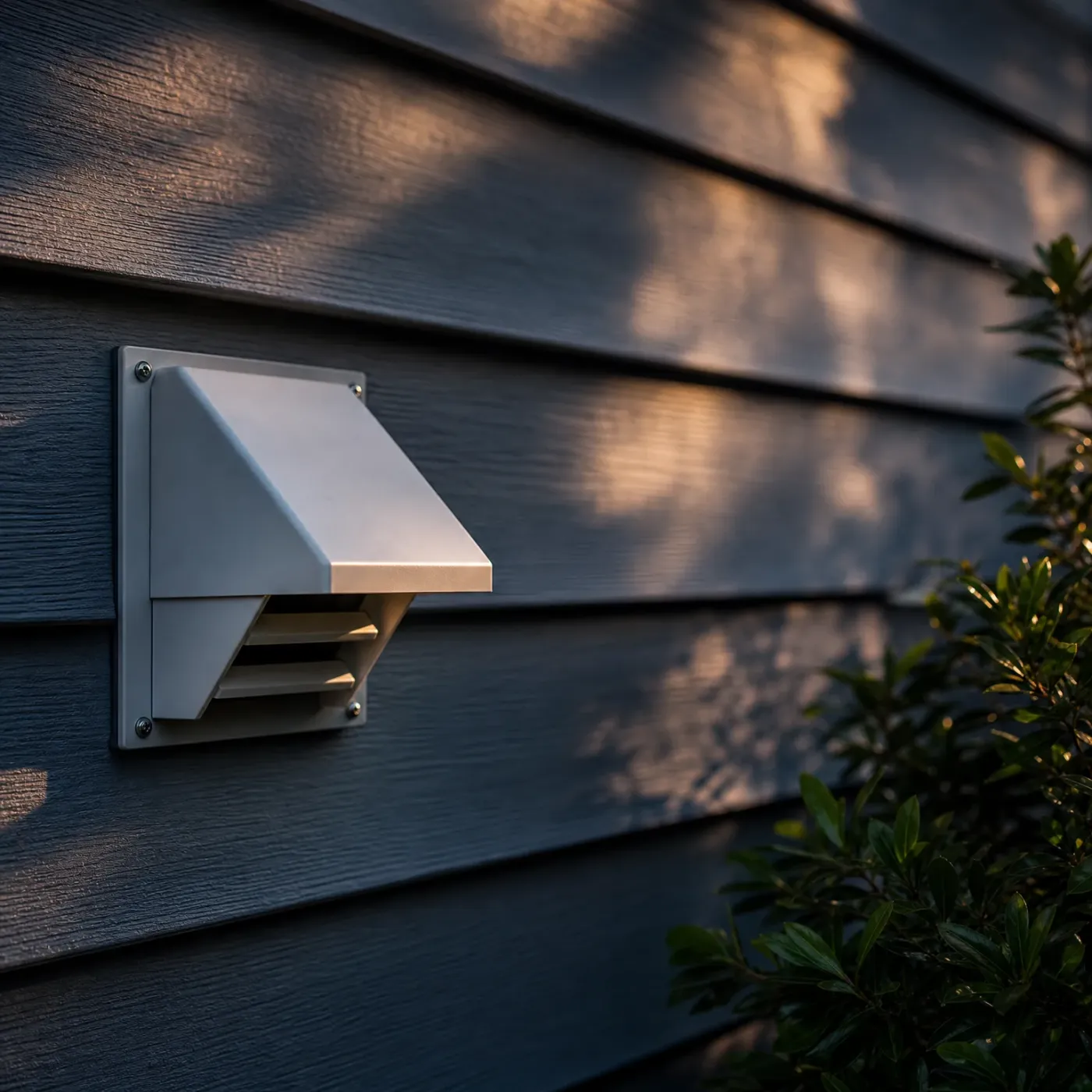
A white hooded louvered vent cover mounted on dark gray horizontal lap siding, with dappled late-day light and shadows across the wall and a leafy shrub at the right edge.

It's off your list after this

Birds nesting in a dryer vent in Queens, NY

Birds in a vent make noise you can hear from inside the house, and a nest blocks the airflow your dryer needs to work right. This page gets into what to do about it and why it matters for your dryer and your vent. Send the form once and let someone else take it from here instead of calling around Queens for a contractor.

Send my request

A bird builds a nest in a dryer vent because the vent hood opens to the outside and keeps rain and wind off, which makes it look like good shelter to a bird looking for one. Spring is when this usually starts, while birds are nesting, but the nest can sit there through summer and into the cold months too. Once there's a nest inside, the flap at the vent hood often can't close all the way or open all the way, and the duct behind it narrows. Your dryer forces hot, wet air through that duct every time you run a load. With a nest in the way, the air backs up instead of venting outside. Loads take longer to dry, the outside of the dryer runs hotter than it should, and the lint and moisture that would normally blow outside start collecting in the duct instead. Left alone, that buildup is a fire risk, not just a nuisance.

Why does a blocked vent matter so much in a house like yours?

  • 2.72 people per household on average

    Your household averages 2.72 people, which means more loads through that dryer every week, and more chances for a blocked vent to slow down a load you needed dry.

  • Half the homes here were built by 1953

    Half the homes in Queens County went up in 1953 or earlier, and a vent run that old has had decades for birds to find it before anyone noticed.

  • Power here costs 35.15 cents per kilowatt-hour

    Power here runs 35.15 cents per kilowatt-hour, so a dryer working against a blocked vent to finish a load costs you more than it should every time you run it.

ACS 2020-2024 · EIA-861 2025

Why a Nest Does Real Damage

  • A bird nest in a vent is built from twigs, grass and feathers, and all of it is flammable lint fuel once it dries out.
  • The vent hood has a flap that should swing open when the dryer runs and close when it stops, and a nest wedges that flap open or shut.
  • A blocked vent forces the dryer to push hot, damp air back up the duct instead of outside, so lint collects wet against the duct walls.
  • Most dryer vent runs go from the machine straight to an outside wall, so a nest at the hood blocks the whole run, not just the opening.
  • A dryer that used to finish a load in one cycle and now needs two is a sign air isn't moving through the vent like it should.
  • Removing a nest from inside the vent takes a brush or rod run the length of the duct, not just clearing what's visible at the hood.

A nest doesn't just sit in the way. It changes what happens every time the dryer runs. Twigs and grass dry out fast in a hot duct, and lint has always collected there, so now the two are mixed together right at the point where hot air leaves the house. That hood flap exists for a reason. It keeps the weather out between loads and opens under the pressure of the exhaust air while the dryer is running. A nest built around the flap stops it from doing either job properly, so the duct stays exposed, or the air has nowhere to go and backs up into the vent. Once air stops moving the way it should, the moisture the dryer is trying to push outside has nowhere to go but back into the duct, where it settles into the lint instead of leaving with the exhaust. That's wet lint sitting against metal or plastic ductwork, which is worse than dry lint in the same spot. None of this shows itself at the hood. The blockage sits wherever the nest is, and in most homes that's the one spot between the dryer and the outside wall, so clearing the opening doesn't clear the run. A load that used to take one cycle and now takes two is the duct telling you air isn't getting through anymore.

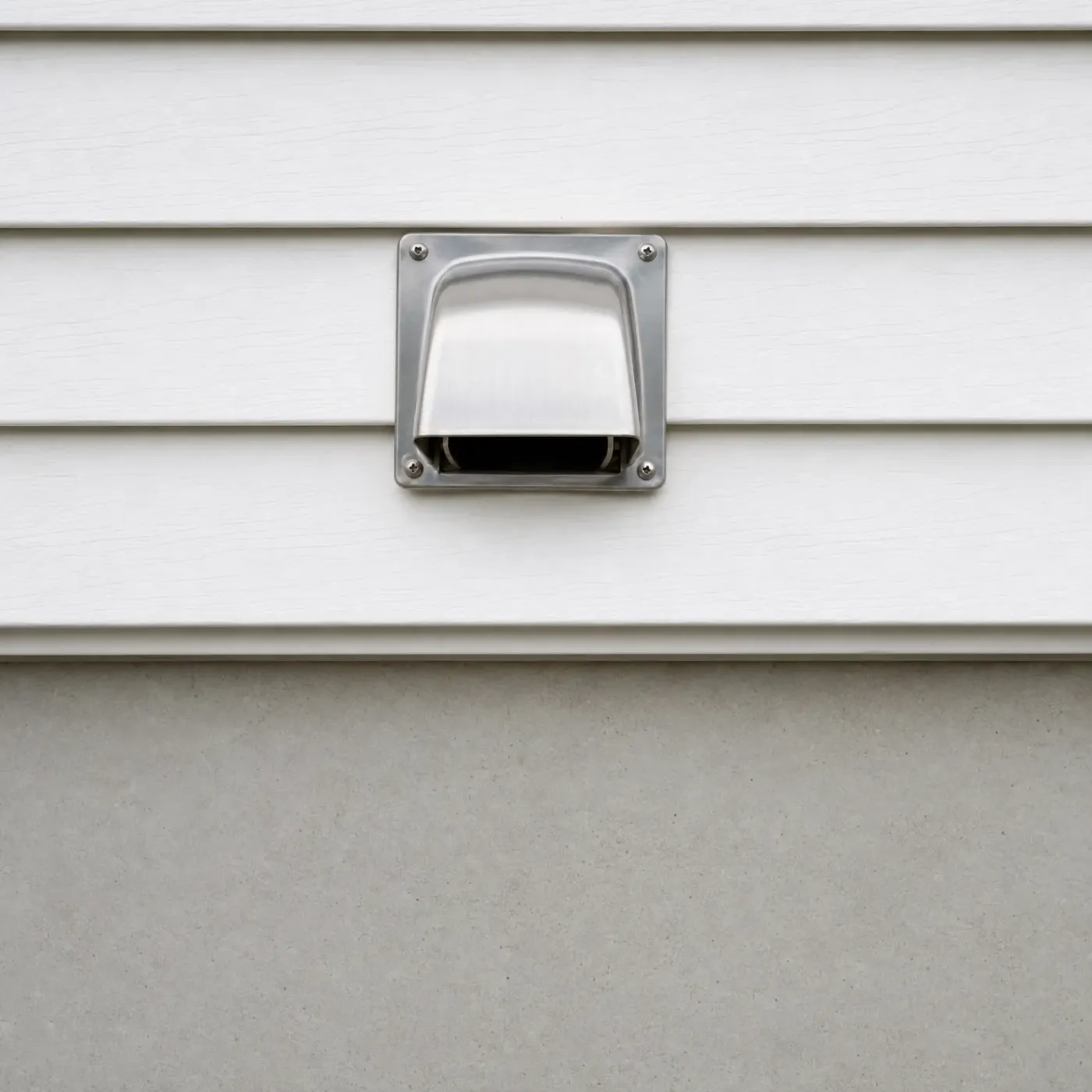
A stainless steel hooded dryer vent with four corner screws mounted on white horizontal lap siding above a gray concrete foundation.
The flap moves freely and the hood sits flush against the siding, so the dryer pushes air straight outside with nothing in the way.
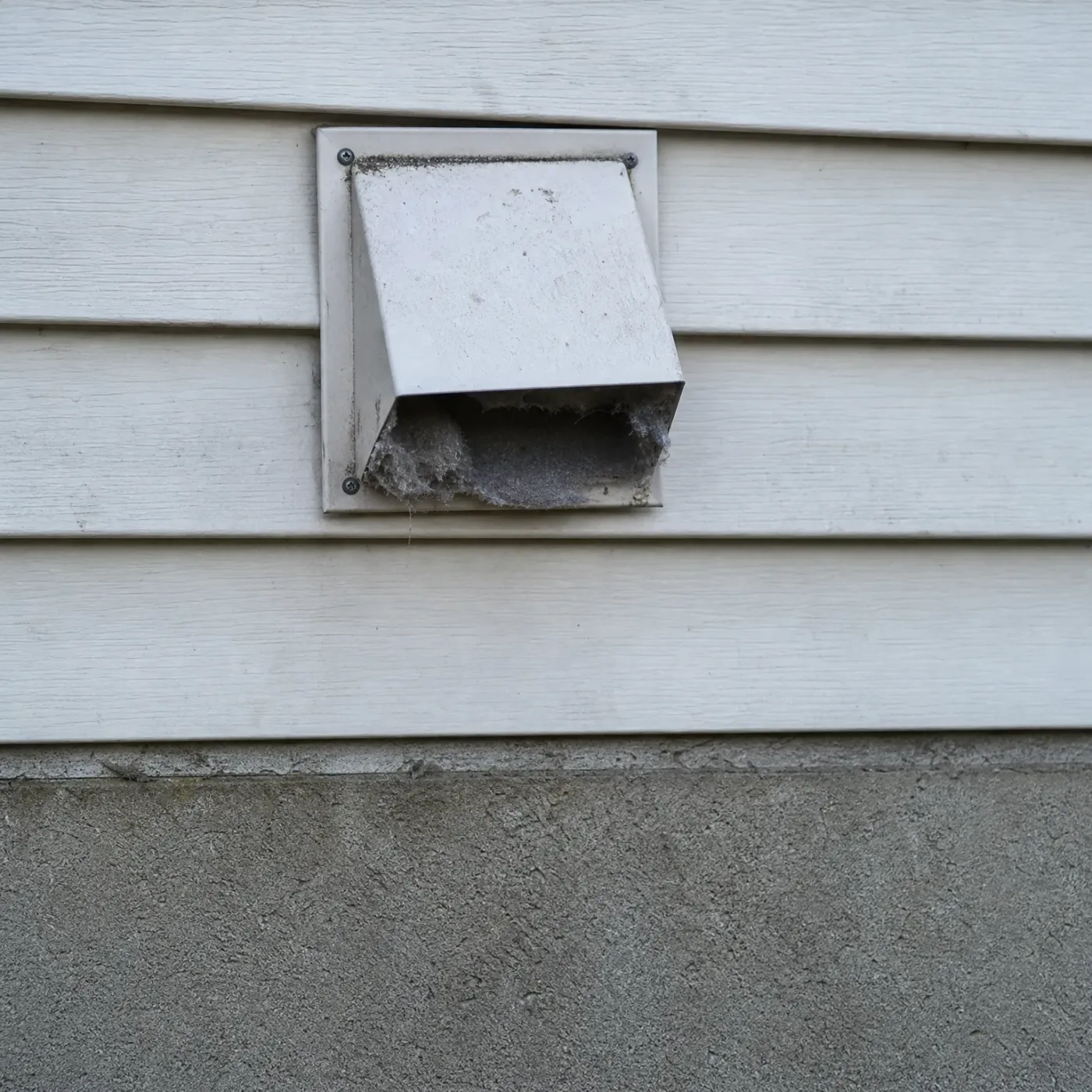
A white hooded dryer vent mounted on light-colored lap siding above a concrete foundation, with lint clogging its opening.
Lint has packed the hood solid and the flap can't close anymore, which is exactly the kind of buildup a nest adds to.
A smiling bearded man in a dark blue henley shirt sits leaning back on a light grey sofa in a living room, with a bowl of popcorn on a wooden coffee table and a large window behind him.
A bearded man in a dark quarter-zip sweater sits smiling on a brown sofa in a dimly lit living room, with a bowl of popcorn and a mug on a table in the foreground and a potted plant near a window behind him.
A smiling man with graying dark hair and a beard, wearing an olive sweater, sits on a sofa in a living room beside a bowl of popcorn on a wooden table.
A smiling man in a dark green henley shirt sits on a gray sofa in a living room with a lit table lamp, wooden shelving unit, and a bowl of popcorn in the foreground.

Stop chasing a dryer vent pro

A nest in the vent doesn't clear itself out. It sits there through every load until something pulls it loose, and meanwhile your dryer is running longer to do the same job, pushing warm moist air into a blocked pipe instead of outside. That's wear on the dryer and it's the fire risk this page already walked through. Checking the hood from outside tells you there's a problem. It doesn't get the nest out from a duct that runs through your wall, and birds don't wait for a convenient weekend to pick their spot. You could spend an afternoon calling around Queens, explaining the same thing to each one, waiting on callbacks, then stacking up quotes to see who actually answers. Or you send this once and someone with the right tools for the job takes it from here. Your dryer keeps running every week whether this gets handled or not. The only question is how long that nest stays in the vent while it does.

How a blocked vent raises your bill

A dryer pushing air against a nest runs longer to finish the same load. Power here is among the most expensive in the country, so a longer cycle costs more than it would in most other places. The heating element and the motor both keep working the whole time the vent stays blocked, not just at the start of the cycle. Run that extra time across every load a 2.72 person household puts through in a week, and the difference shows up on the bill before it shows up anywhere else. The dryer isn't broken. It's working against a pipe that isn't clear.

What a cleared vent looks like

Clearing the nest means opening the vent run from the hood back to the dryer, not just pulling twigs out of what you can reach from outside. A nest can pack material past the hood and into the duct itself, especially if it's been building since spring. Once the vent is clear, the flap at the hood should swing open when the dryer starts and drop shut when it stops. If it hangs open or won't move at all after the nest is out, something is still caught in it or the flap itself got bent while the nest was wedged against it.

A woman in a cream knit sweater reclines on a beige couch with eyes closed and a slight smile, a gray hardcover book resting open on a textured blanket over her lap, with a lit table lamp and a leafy plant in the dim background.
A smiling middle-aged man in a dark green sweater sits at a candlelit table with a glass of red wine and a bowl of salad in the foreground.
A white hooded exterior vent cover with a mesh screen mounted on gray lap siding above a concrete foundation.

A clear vent

The flap swings open when the dryer starts and closes when it stops. Air moves straight out through the screen with nothing slowing it down. Screws hold the hood flat against the siding, so there's no gap for anything to get in or build up.

A white plastic hooded dryer vent mounted on beige lap siding, with gray lint clogging its louvered opening and hanging below it.

A vent a bird has claimed

Lint hangs loose from the flap because the hood can't close all the way anymore. Something is wedged inside the opening, and the dryer is pushing air against it instead of outside. This is what to look for from the ground.

A white plastic hood-style dryer vent mounted on beige horizontal siding, with its opening clogged by thick gray lint.
Before you get your dryer vent cleaning
A white hooded dryer vent with a louvered opening mounted on light gray horizontal lap siding above a concrete foundation.
After you get your dryer vent cleaning

What are you noticing with your dryer lately

A load that used to come out dry in one cycle now needs a second run. The outside of the dryer feels warmer than usual, or the laundry room itself feels warm and damp partway through a cycle. You might hear chirping or scratching from the vent hood when the house is quiet, especially outside while the dryer runs. Clothes come out hotter to the touch, and the vent hood outside may have grass or twigs poking out from under the flap. Left alone, a blocked vent keeps the dryer running hotter and longer than it was built for, and that heat has nowhere to go but back into a pipe packed with dry nesting material.

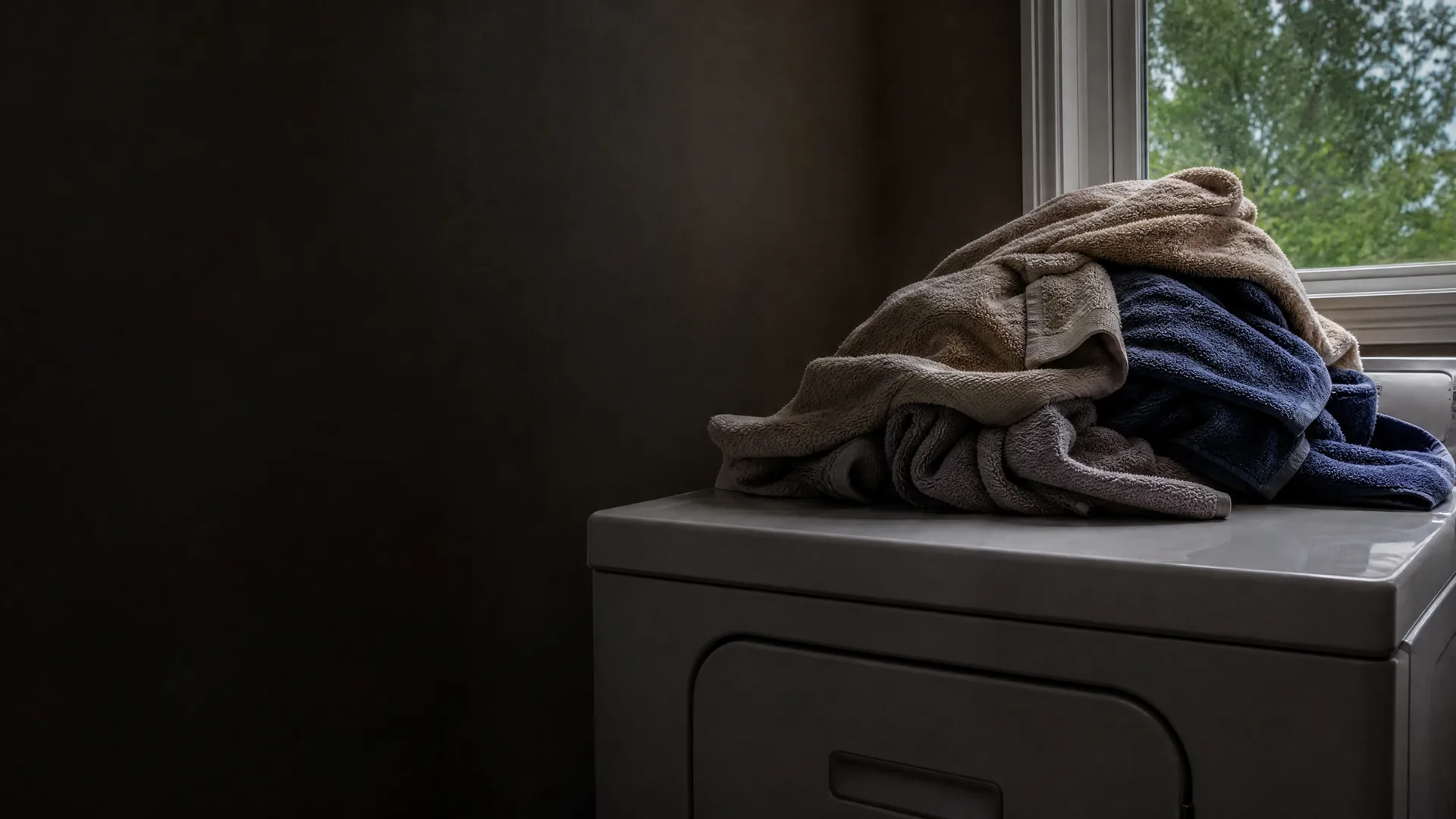
A pile of beige, blue, and gray towels sits on top of a white dryer beside a window with green foliage outside, against a dark wall.

It's a weeknight, past seven, and the towels are still damp. You've run the cycle twice now and pulled them out hot but wet, the kind of wet that means the dryer is working hard and getting nowhere. You pile them back on top of the machine and stand there a second, listening. There's a faint chirping coming from somewhere behind the wall, out near where the vent lets out. The laundry room feels warmer than it should, a little close, like the air has nowhere to go. You open the dryer door again, push the towels around, and start a third cycle, already knowing it probably won't be enough.
2.72 people per household on average

At 2.72 people, most houses in Queens County are running a dryer several times a week, not once. A nest cuts down the airflow every one of those loads depends on, so the slowdown shows up fast and keeps showing up until the vent gets cleared.

ACS 2020-2024

A wooden table in the foreground holds a closed laptop and a ceramic mug of coffee, with a spindle-back wooden chair behind it, a beige wall with paneled wainscoting, a window at left, and a kitchen counter with a cutting board, bowl of fruit and greenery at right.

A bird nest in the vent gets cleared out, not left to work itself loose

A dryer vent with a nest in it does not fix itself. Someone has to open the line, pull the nest and the lint packed around it, and check that the flap on the hood swings free again. Until that happens, every load runs longer than it should, and the vent stays a fire risk sitting right against your house.

You could spend the next few evenings calling vent cleaners around Queens, explaining the same thing to each one, then sitting on quotes trying to figure out who actually knows this work. Send the form once instead and that search becomes someone else's job. You get back to the part that matters: a dryer that dries a load in one cycle and a vent that is clear.

A shallow dark wooden bowl and a stack of books rest on a wooden table in front of a beige sofa with linen and green cushions, with a tall ceramic vase of thin branches beside a window in the background.
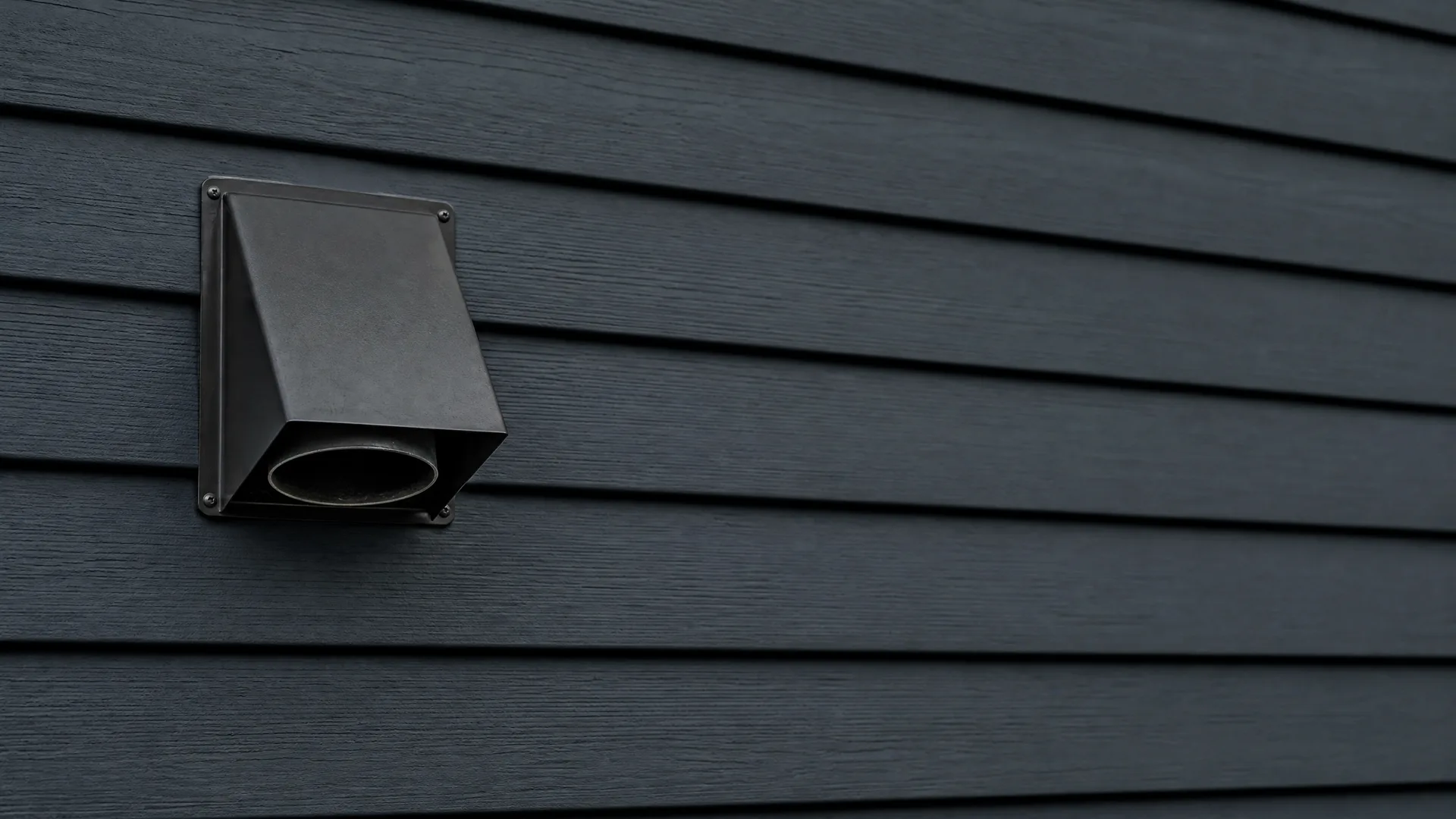
A dark grey hooded vent cover with a round downward-facing opening mounted on a dark grey horizontal lap siding wall.

Send one request and you're done looking

One form replaces the calls you'd make to find a dryer vent pro.

Duct and vent cleaningQueens County, NY
Step 1 of 3

What kind of equipment?