

A vent that's clear
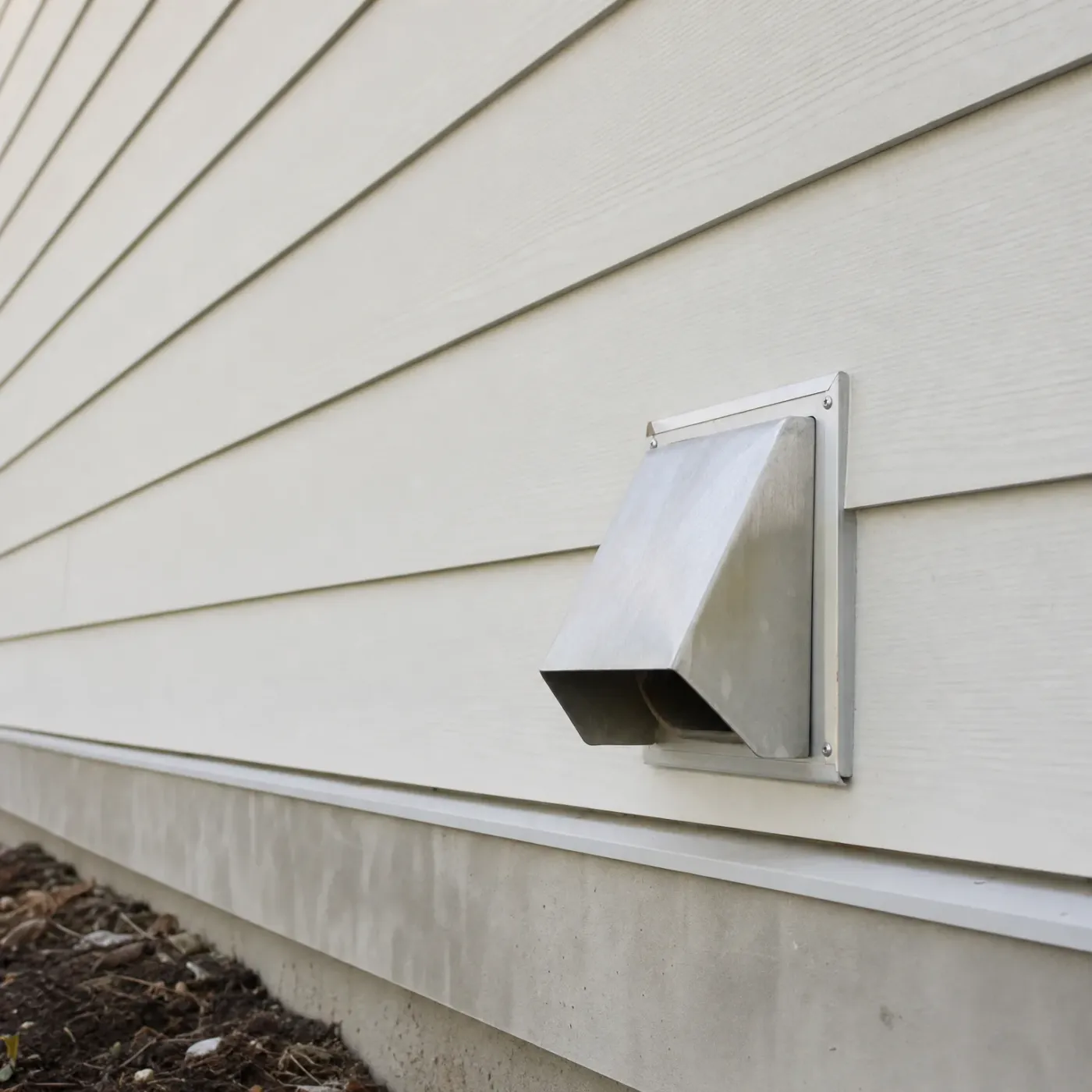
Outside, the hood sits open and the flap moves freely when the dryer runs. Air pushes out strong enough to feel with your hand. No lint catches around the opening, and the screen behind it stays clean.
Send the form and finding a dryer vent cleaner is handled.
Let a pro reach outA clogged dryer vent shows up first in the dryer itself. Clothes take two or three cycles to dry when one used to do it. The dryer runs hot to the touch, or the room around it feels warmer than it should. You smell something faintly burnt, or notice lint collecting around the lint trap edges instead of catching in the screen. Outside, the vent hood flap stays shut or barely moves when the dryer runs, and lint sits at the vent opening. In New York, with power among the highest in the country, a dryer fighting a blocked vent runs longer and costs more every time you use it. The blockage builds slowly, from lint that never made it all the way out, and a vent that was fine a year ago can be mostly closed off now. Left alone, it strains the dryer and is a real fire risk. A cleaning clears the duct so air moves freely again.

Outside, the hood sits open and the flap moves freely when the dryer runs. Air pushes out strong enough to feel with your hand. No lint catches around the opening, and the screen behind it stays clean.

The hood outside barely moves air, even on high heat. Lint has packed into the screen and the mesh around the opening, dark with grime. That buildup is blocking the exhaust the dryer needs to push out.
Walk into the laundry room partway through a cycle and feel the air. If it's warmer than the rest of the house, or the humidity makes the walls feel damp, the vent isn't carrying that air outside the way it should. Check the hood outside while the dryer runs. Little to no airflow, or a flap that barely lifts, means the line is blocked somewhere between the drum and the outside wall. Lint built up behind the wall or in the duct run holds heat in the dryer and in the room around it. Left alone, that heat has nowhere to go but back into your house, and a dryer running hotter than it should is a fire risk.

A dryer pushes out moist air by the lungful every cycle. Lint catches on the smallest ridge inside the duct, and once a little is stuck, more builds on top of it. In homes with long runs to an outside wall, or a vent with a few bends in it, that buildup narrows the path until the dryer is pushing air through a gap instead of an open tube.

Most homes in New York heat with gas, and a lot of those gas lines run to the dryer too. A gas dryer vents combustion byproducts along with the hot, damp air. When the vent is blocked, those byproducts have nowhere to go but back toward the room. An electric dryer with a clogged vent runs hotter and wears out parts sooner. A gas dryer with the same clog is a different kind of problem.
You've noticed your dryer vent needs cleaning more often than a neighbor's, or more often than the last place you lived, and you're wondering why some setups clog faster than others. It's not just how much laundry you run through. The path the air takes out of your house matters as much as the lint itself.
Air has to carry lint the whole length of the duct to get it outside. A short, straight run does that easily. A long one, or one with elbows where the duct bends around a wall or a joist, slows the air down at each turn, and lint settles out right there. Homes where the dryer sits far from an outside wall, which is common in New York's older houses and apartment buildings, often have more bends built into the run. Plastic or foil duct makes it worse, since the ridges inside snag lint that a smooth metal duct would let pass. The vent hood and the screen behind it catch their share too, especially with a long run feeding into them.


Answer a few questions about the dryer vent cleaning and skip the search.
One request and the dryer vent cleaning stops waiting on you.
You only hire the pro if you want to.





This is what a clear vent looks like from outside. The hood sits open, the duct behind it visible and unobstructed. Air has a straight path out, so the dryer isn't fighting to push it through.

Lint has built up across the hood and packed into the mesh screen, leaving only a small gap for air to escape. From the yard it looks minor. Inside, the dryer is working harder for the same load.
At 26.39 cents per kilowatt-hour, running an electric dryer against a clogged vent costs more here than almost anywhere else. Extra cycles to get clothes dry add up fast on a bill already higher than most of the country.
EIA-861 2025 statewide residential average

It's almost nine on a Tuesday and the dryer has been running since before dinner. You pull the door open expecting warm, dry towels and instead get a heap that's still damp at the fold, heavier than it should be. This is the second cycle for this load. The laundry room is warmer than the hallway, almost sticky the way it gets outside in August, and the air smells faintly of hot dust. You press a towel to your cheek anyway, hoping this time it worked, then start the dryer again and go back to the kitchen, leaving the pile stacked on top of the machine.

The signs are the same ones this page walked through. Longer dry times, a hot dryer, a warm or damp laundry room, a weak push of air at the outside hood. One or two of those together means lint has built up enough to matter, not just here and there but all along the duct.
Once you know that, the next step is getting someone out to clear it, and that's the part that eats time. Looking up companies, calling a few, explaining the same thing about your dryer and your vent run to each one, waiting on quotes to compare. Send the form on this page and that search is done. You're left with the part that actually gets your vent clear again.


Let someone else find the pro



