Profile view of a bearded man wearing a dark baseball cap and a dark gray T-shirt against a plain off-white background.

Dryer hot but clothes still wet in New York

Duct and vent cleaningNew York
Step 1 of 3

What kind of equipment?

A dryer that runs hot but leaves clothes damp almost always means the air isn't moving, not that the heat is weak. Heat alone doesn't dry clothes, airflow carries the moisture out, and if the vent run is clogged with lint, that hot air just sits in the drum instead of exhausting outside. In New York, vent runs are often long to reach an exterior wall, with several bends to get there, and every bend is a place lint can build up. A clogged vent also makes the dryer work harder and run longer to get clothes dry, and with what power costs here, that adds up fast on the bill. If this has been building for a while, it's worth having the full vent run cleaned out, not just the lint trap, since that's usually where the real blockage is sitting.

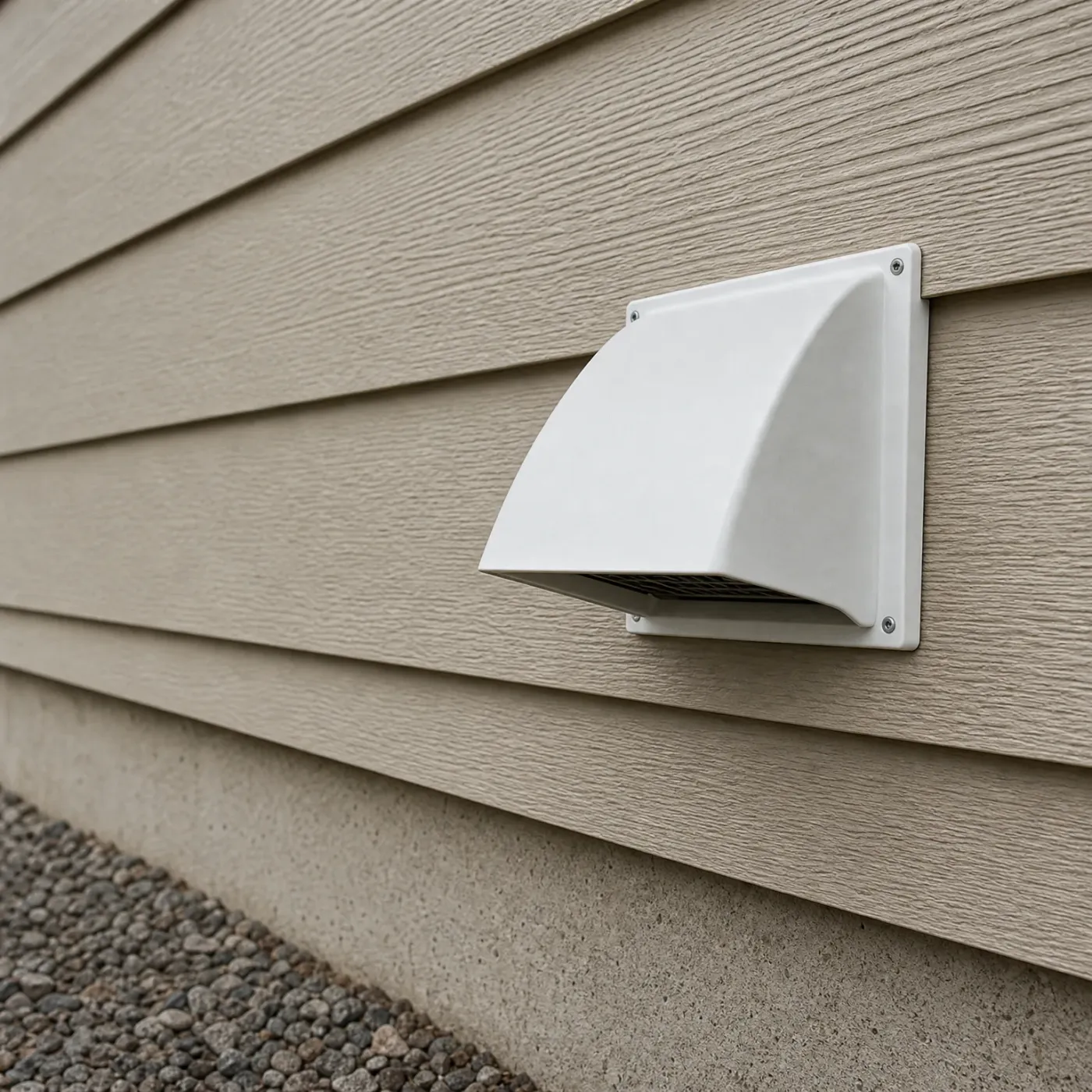
A white plastic louvered dryer vent hood mounted on beige horizontal lap siding above a concrete foundation wall bordered by gravel.
A clear vent cap like this lets exhaust air escape fast, so heat moves the moisture out instead of leaving it in the drum.
A dusty white plastic dryer vent hood with lint-clogged louvers mounted on beige horizontal vinyl siding above a concrete foundation wall and a bed of rounded gray rocks.
A cap clogged with lint chokes the exhaust, so even a hot dryer just circulates damp air until the load finally gives up.

Heat is only half the job. The dryer warms air over an element, pushes it through the drum, and then that air has to leave through the vent hose carrying the moisture with it. If it can't get out, the moisture goes nowhere, no matter how hot the drum runs. Inside, a sensor is reading how dry the air feels and ending the cycle once it thinks the load is done. A blocked vent can fool that sensor into stopping too soon, which is how you end up with a hot dryer and a wet load. Lint usually isn't the problem at the wall cap, where people check first. It builds up at the elbows behind the machine, where the hose bends. A standard vent run is 4 inches across, and anything narrower, crushed, or packed with lint chokes the airflow a full load needs. Rigid metal duct keeps that path clear. Foil or plastic accordion hose has ridges that catch lint at every turn, which is why the same clog keeps coming back in that style.

How the vent actually dries clothes

  • The dryer pulls room air over a heating element, then pushes that warm air through the drum and out through the vent hose.
  • A moisture sensor or thermostat inside the drum cuts the cycle short once it reads dry air, so a blocked vent can trick it into stopping early.
  • Lint builds up fastest at the elbows where the hose bends behind the machine, not out at the wall cap where people usually check.
  • A clogged vent forces the dryer's thermal limit switch to trip and reset over and over, which is part of why the drum feels hotter than usual.
  • Full-size dryer vents run 4 inches around, and anything narrower or crushed flat cuts the airflow a standard load needs to dry.
  • A rigid metal vent moves air in a straight line, while the foil or plastic accordion style traps lint in every ridge along the way.
An older man with gray hair, a dark coat and scarf dusted with snow stands in a warmly lit entryway with an open wooden door, a table lamp, framed pictures, and a plant in a vase.
An older man with gray hair and a beard wearing a dark snow-dusted coat stands in a home entryway, with a lamp-lit living room and a wooden staircase behind him.
An older man with gray hair and a beard, wearing a dark snow-dusted coat, stands in a warmly lit home entryway with a hallway, console table with lamp, patterned rug, and living room visible behind him.
A gray-haired bearded man in a dark snow-dusted coat and scarf stands inside a dimly lit home entryway, with a hallway, framed picture, lit table lamp and staircase behind him.

Why lint builds up so fast here

New York summers run sticky, and that humidity mixes with lint to form a paste that sticks to the inside of the vent instead of blowing through with the exhaust air. Over a season of loads, that buildup narrows the vent until only a fraction of the air that should be leaving the drum actually gets out. A dryer vent in a drier climate stays looser longer. Here, the same number of loads packs more lint into less space, which is why a vent that was clear in spring can be choked by August.


What a blocked vent costs you here

Power in New York is among the most expensive in the country, so a dryer fighting a clogged vent runs longer and burns more of that expensive electricity every single load. Gas heats most homes here, but the dryer's drum motor and blower still pull electricity, and a restricted vent makes both work harder for the same dry towel. Instead of one cycle, you get two or three, each one costing the same as the last. A clean vent gets you back to one cycle doing what one cycle should.

Power costs 26.39 cents per kilowatt-hour statewide

At 26.39 cents per kilowatt-hour, running a dryer twice through a clogged vent costs more than running it once through a clear one. A blocked vent makes the drum work longer to get clothes dry, if it ever does, and every extra cycle shows up on that bill.

EIA-861 2025 statewide residential average

A lint-clogged hooded dryer vent mounted on light gray horizontal lap siding above a concrete foundation wall.
Before you get your dryer vent cleaning
A white hooded dryer vent with a square screwed-on flange mounted on gray horizontal lap siding, above a concrete foundation wall edged with gravel stones.
After you get your dryer vent cleaning
A white hooded exterior vent cover with a screened opening mounted on beige lap siding above a concrete foundation and gravel strip.

Get the right pro for your dryer vent

Your request stays with one local pro.

Your dryer vent cleaning request goes to a local pro who does this work.

Get a local pro

There's no charge for the request.

Clear Vent vs. Clogged Vent

Vent run stays clear

  • Lint gets cleared out of the hose and the wall cap, so exhaust air has a straight path out of the house.
  • A load that used to take two cycles to dry finishes in one, because the moisture is actually leaving the drum.
  • The moisture sensor reads dry air when the clothes really are dry, so the dryer shuts off on time instead of running long.
  • With the cap open, humid air from outside isn't pushing back against a weak airflow, so the vent keeps doing its job through a sticky New York summer.
  • Gas keeps heating the drum the same as always, so what changes is how fast that heat actually leaves with the air.

Vent stays clogged

  • Lint and humidity keep packing into a paste inside the hose, and that layer only gets thicker with every load.
  • The dryer runs its full hot cycle, then runs again, because damp air trapped in the drum won't let the sensor read dry.
  • Each extra cycle pulls more power at New York's rates, so the bill reflects every load that had to run twice.
  • A fully packed vent can push hot, moist air back into the room instead of outside, since it has nowhere else to go.
  • The heating element keeps working as hard as it ever did, so the wasted energy is all in the air that never leaves.
A white hooded exhaust vent with a louvered opening mounted on white horizontal lap siding, with blank white space at right.

What you'll notice first

The laundry room stays warmer and damper than it used to, even with the door open. Towels come out hot to the touch but not dry, so you run them again, and the second cycle smells more like scorched lint than clean cotton. Check the wall cap outside while a load runs. If you can't feel much air coming out, the vent run is holding the moisture inside instead of letting it go.

A metal hooded exterior vent cover screwed to beige horizontal lap siding, next to a plain white wall corner.

What stays in the house

Lint that doesn't make it out the vent doesn't disappear. It settles in the hose and against the duct walls, and some of that moist, warm air finds its way back into the room around the dryer instead of outside. A gas dryer venting poorly is worth paying attention to, since the same blocked path that traps moisture can trap exhaust. If drying time keeps climbing, that's the vent telling you it's narrower than it was last year.

A woman in a long cream cardigan and jeans stands at an open wooden front door of a gray shingled house with stone-based porch columns, with a second person visible inside, and potted flowers and shrubs beside the entry.

Hot and wet together means the air has nowhere to go

A dryer running hot with clothes still damp at the end of the cycle is telling you the vent run is blocked, not that anything inside the machine is broken. The lint paste that built up over a season of sticky New York summers is still sitting in that hose or behind the wall cap, and no setting or extra cycle fixes that. Clearing the line is what brings the airflow back.

A local contractor who clears vent runs for a living in this climate knows where New York houses tend to clog, whether that's a long hose run to an outside wall or a cap that chokes up every humid season. Once you're matched, that one contractor reaches out to look at your specific setup rather than a crew guessing over the phone. You'll know your vent is clear when a load dries in one cycle again, not two.

A gray upholstered sofa with a beige cushion and knit blanket beside a curtained window, with a white mug and a book on a dark wooden table in the foreground and a lit lamp in the background.
A woman wrapped in a thick cream knit blanket sits in an armchair beside a lit table lamp, with an open book in the foreground and a frost-covered window behind her.
A woman in a cream knit sweater sits in an armchair with her eyes closed and head tilted back, beside a window showing orange autumn foliage and a wooden side table with a mug.

A pro who works on dryer vents

A vent that's blocked with lint doesn't fix itself, and running load after load through it only adds to a power bill that's already steep here. Getting the run cleared is a job for someone who works on vents like yours all season and knows where New York lint tends to pack in tightest. Ask to be matched and you'll hear from one licensed local contractor, not a handful competing for your call, so the person who reaches out is the one who'll actually look at your vent.

Match me with a pro

Your dryer vent cleaning request goes to one local pro.

You only hire the pro if you want to.