Send the request and finding a pro stops being your problem.
You turned the thermostat down and the room two doors over still won't cool off. Or you noticed a room upstairs that never quite warms up in January no matter how long the furnace runs. That's often a duct problem, not a furnace or AC problem. Leaky ducts lose conditioned air into your attic, basement, or crawl space before it ever reaches the room.
In the Bronx, that waste costs more than it would most places. Power here is among the most expensive in the country, and most homes heat with gas, so a leak in the supply duct near the furnace means you're paying for heat that warms a crawl space instead of your bedroom. Summers get sticky enough that a weak duct run upstairs can leave a whole floor feeling muggy even with the AC working fine.
Some signs are easy to catch yourself: uneven temperatures room to room, ducts you can see or reach that feel warm or cool to the touch where they pass through an unconditioned space, a system that runs long cycles without catching up, dust building up fast near vents. Others need someone who works on these systems to find, since the leak is often in a joint or seam you can't see without opening up the ductwork.
That's where a local contractor comes in. Someone who services Bronx County homes all year has seen what usually fails first in this kind of system, the kind of thing that's hard to guess at from a description alone. Send the request through this page and it goes to one licensed local contractor, not a handful of companies competing for your callback. You're not left sorting through quotes or explaining your situation over and over. Once it's sent, the job of finding someone who knows this work is off your plate. The answer to what's actually happening in your ductwork comes next.
What are the signs of leaky ductwork?
A room that won't cool down or warm up no matter how long the system runs usually means the ductwork is losing air before it gets there. You want to know what to actually look for, short of cutting into a wall, that tells you the ducts are the problem rather than the furnace or the AC itself. Some signs are things you can see, others are things you feel or notice on the bill.
Uneven rooms, dusty air, high bills, and warm or cool spots near the ducts themselves
A few rooms are always off from the rest of the house, no matter the season. Dust builds up fast even right after cleaning, because leaky ducts pull in air from attics and crawl spaces instead of just the room. You might feel a warm or cool draft near a duct joint or a floor register, which means air is escaping before it reaches the room it's meant for. Bills climb because the furnace or AC runs longer to make up for what's lost along the way. Power here isn't cheap, so that loss shows up fast. If ducts run through an unheated basement or attic, as they do in a lot of Bronx houses, the leaks are often worse there than anywhere else in the system.
Sealed runs like this hold their pressure, so the air leaving the furnace or the AC is the air that reaches the vent.
Gaps and loose joints in runs like this let air escape into the basement before it ever reaches the vent.
How Ductwork Actually Leaks
Ducts are built from sections joined together, and most leaks happen at those joints, not through the metal itself.
A duct system that's losing air makes the blower run longer to push the same amount of heat or cooling through the house.
Dust streaks around a vent cover often mean air is being pulled in around the boot rather than pushed out through it.
Ducts that run through an unconditioned basement or crawlspace lose air to that space before it ever reaches a room.
A hissing or whistling sound near a duct run usually points to a gap at a joint or a seam that's come apart.
Rooms farthest from the furnace or air handler are usually the first to show the effect of a leak closer to the source.
Ductwork is never one continuous tube. It's built from shorter metal or flex sections, fitted together at joints and seams, then wrapped with tape or mastic to hold the seal. That seal is what fails first. The metal itself almost never rusts through or cracks open. It's the joints, where two sections meet, that separate over time as the system heats and cools and the metal expands and contracts.
Once a joint opens up, the furnace or the AC has to run longer to deliver the same amount of air, because some of what it's pushing out is leaking into the space around the ducts instead of reaching the vent. If that run is in a basement or crawlspace that isn't heated or cooled, the air you paid to condition is warming or cooling that space instead of your living room.
You can sometimes hear it before you can see it. A hiss or a faint whistle near a duct run, especially one you can access in a basement, usually means air is escaping at a seam under pressure. Around the vents themselves, look for dust streaked across the cover or the wall nearby. That pattern often means the boot behind the vent is loose enough that it's pulling air in from around it rather than pushing it cleanly into the room.
The room that tips you off is usually the one farthest from the furnace or air handler. It's the last stop on the run, so it shows the effect of a leak that happened much earlier in the line.
Why does duct leakage matter so much in your house
Half the homes here were built by 1955
Half the homes in Bronx County were built in 1955 or earlier, and ductwork that old has had decades of joints to work loose.
Heat runs October through April
Furnace runs from October through April, so a leak that wastes air costs you most of the year, not just a few cold snaps.
Cooling runs June through September
AC runs June through September, and the same leaky run that starves a room in winter does it again every summer.
A duct system doesn't announce a leak the way a dead igniter or a tripped breaker does. It just quietly costs you comfort and money, room by room, month after month, until someone traces it. That's the part that's hard to do on your own. You can feel for air at a joint in the basement, but most of the run is behind drywall or tucked above a dropped ceiling, and finding every gap means someone who does this work in Bronx homes regularly and knows where joints tend to fail first. A local contractor who tests and seals ductwork for a living can look at your layout, the rooms that never heat or cool right, and tell you fairly quickly whether it's the ducts or something else in the system. Sending the request means one contractor looks at your house, not a handful competing for the job. Given how long your furnace and AC both run here, that's worth sorting out before another season of paying to heat or cool a basement.
Where ducts run matters too
Ducts that run through a basement, crawlspace or attic lose conditioned air to a space you're not trying to heat or cool at all. That air is gone, not just delayed. A duct that leaks inside the living space at least loses air into a room you're using, but one that leaks into an unconditioned attic above a Bronx row house or a crawlspace under an older two-family is paying to heat or cool the outdoors. The location of the leak changes how much it costs you, even when the size of the gap is the same.
Return leaks pull in the wrong air
Supply ducts push conditioned air out to the rooms. Return ducts pull air back to the furnace or air handler to be heated or cooled again. A leak on the return side doesn't just lose air, it draws in whatever is nearby: dust from a basement floor, fumes from stored paint or gasoline, musty air from a damp crawlspace. That air gets pulled into the system and pushed right back out through the vents into the rooms you live in. A whole-house smell that shows up only when the furnace or AC is running often traces back to a return leak, not the house itself.
Ductwork sealed and tight
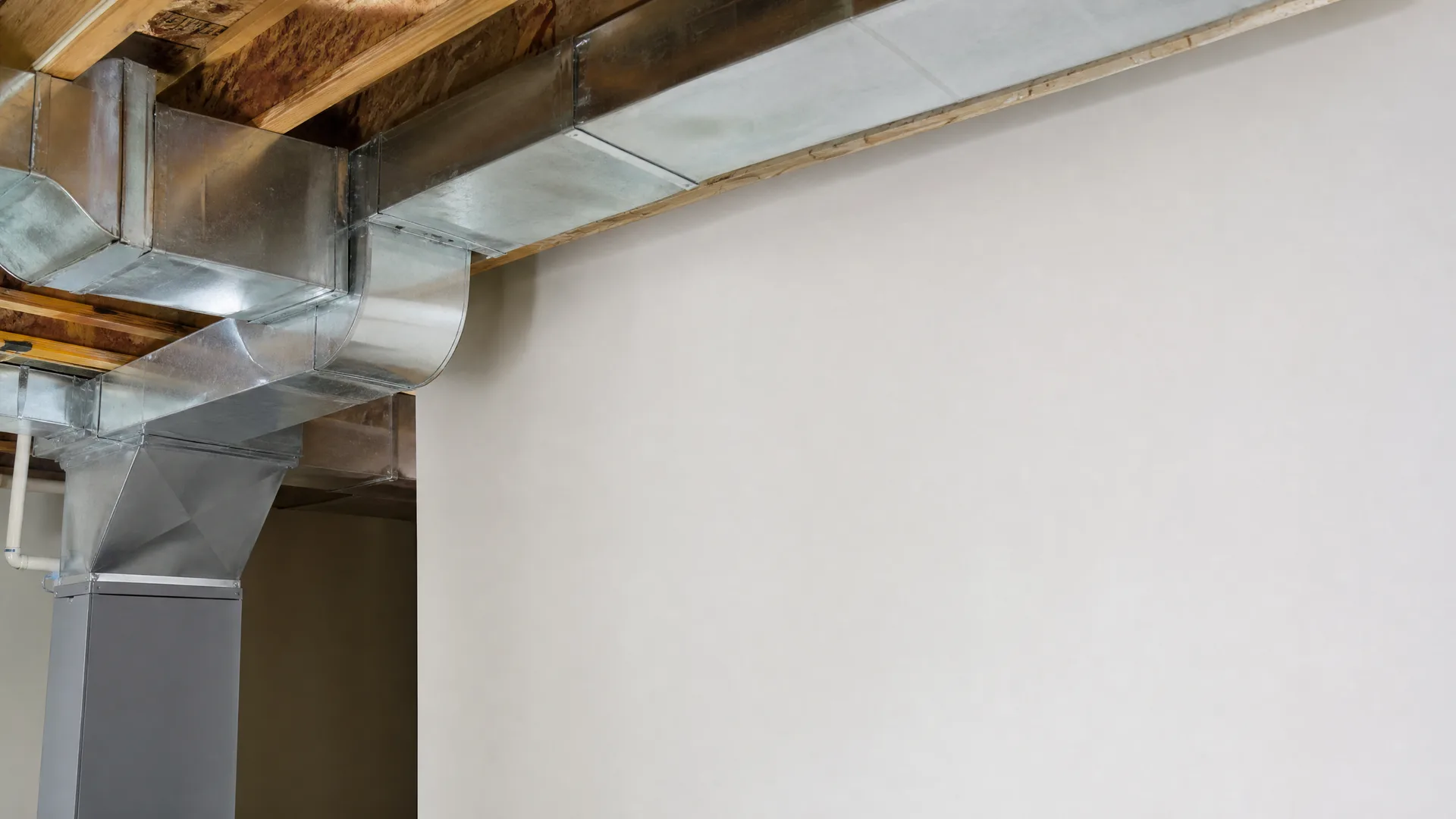
This is what a duct run looks like when it's doing its job. The metal supply and return runs stay joined tight along the joists, so the air the furnace pushes out is the air that reaches the vent upstairs. Nothing escapes into the basement along the way.
Ductwork losing air
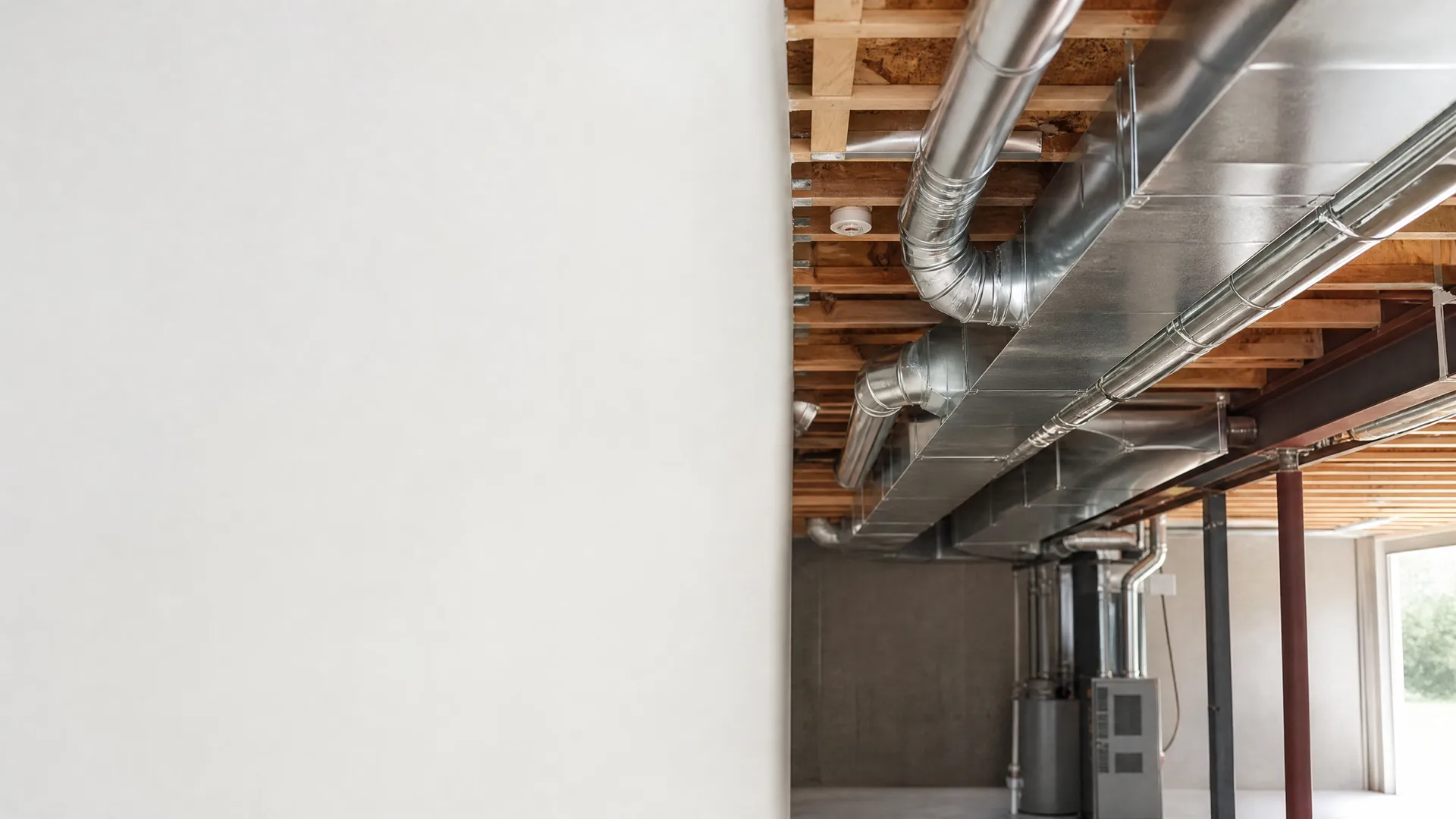
Here the runs look fine from a few feet back, but joints like these work loose over the years and start venting into the basement instead of the house. You won't see it without looking close. You'll feel it as a room that never quite gets warm or cool.
Power here costs 36.97 cents per kilowatt-hour
At 36.97 cents per kilowatt-hour, every bit of conditioned air a leaky duct dumps into the basement or attic is expensive air. Your blower draws power to push that lost air out just the same as the air that makes it to the vent, so a leak here shows up on the bill faster than it would somewhere with cheaper power.
EIA-861 2025
What you'll notice room to room
One bedroom stays warm while the rest of the house is comfortable. The room over the garage or at the end of a long duct run never quite gets there in January, and in July it's the last to cool. You turn the thermostat down another two degrees and it still doesn't catch up. That uneven feel, not the thermostat reading, is usually the tell. A furnace or AC that's actually failing tends to miss the whole house, not just one room.
What it does to your gas and power bills
Gas heats the air, but a leaky duct loses some of it before it reaches the vent, so the furnace has to run longer to deliver the same warmth. That longer runtime also means the blower motor draws power the whole time it's pushing air nobody feels. At New York's electric rates, a blower running extra hours every day from October through April adds up on its own, separate from the gas you're already paying for.
A room that won't hold temperature, a blower that runs long, dust streaks at the vents, a duct joint you can feel air moving through in the basement. Any one of those points the same way: the ducts are losing air before it reaches the room. Finding where takes someone who can get into the basement, the crawlspace or the attic and check each run, joint by joint, which isn't a weekend project with a flashlight. A contractor who works on ductwork in Bronx County through winters that run October to April has seen where these joints tend to give out first, in houses built the same decades as yours. You'll be matched with one licensed contractor local to the Bronx, not a handful of companies calling you back at once. From there it's their job to trace the leak and seal it, and yours is just to let them in the door.
Ductwork Cleaning
Stop chasing a duct system pro
Get matched with someone who does this kind of work in Bronx County.
Get matched with a Bronx County pro who cleans ducts.
Send it once and finding someone is no longer on you.
Send the form and finding a duct cleaner is handled.
Answer a few questions about the duct cleaning and skip the search.
Answer a few questions instead of calling shop after shop.
The pro who reaches out is licensed in New York.
Only one pro gets your request, so you hear from one company.