Mini Split Installation in Staten Island, NY
A new system here will heat from October through April and cool from June through September every year. Tell us about the house, and a licensed contractor who covers Richmond County will get in touch.
Tell us about the job
It takes about a minute.

Eleven months of work for a new mini-split
Staten Island only gets a break from heating or cooling about one month a year. Winter nights average 28°F from December through February, and a mini-split installed here needs to hold heat on those nights, not just take the edge off. Summer afternoons average 84°F, so the same system is running the other direction from June through September.
A mini-split is a split system under federal rules, so any unit installed now has to meet 14.3 SEER2 for cooling and 7.5 HSPF2 for heating at minimum. Those are the floor, not the target, for a system that will spend most of the year working in one direction or the other.
- 7 months
- October through April, your system heats
- 4 months
- June through September, it cools
- 28°F
- the average winter night it heats against
- 84°F
- the average summer afternoon it cools against
NOAA nClimDiv, 1991–2020 normals
- Is a mini split worth it?
- For most homes here, yes. A mini split heats through cold winter nights and cools through summer without ducts, and this area needs one or the other eleven months of the year. Staten Island winters average 28°F, and a contractor can confirm the unit's rated capacity against that before you decide. If your home already has gas heat and just needs cooling, or has a room ductwork never reached, a mini split solves that without touching the rest of the house.
- How many rooms can a mini split cover?
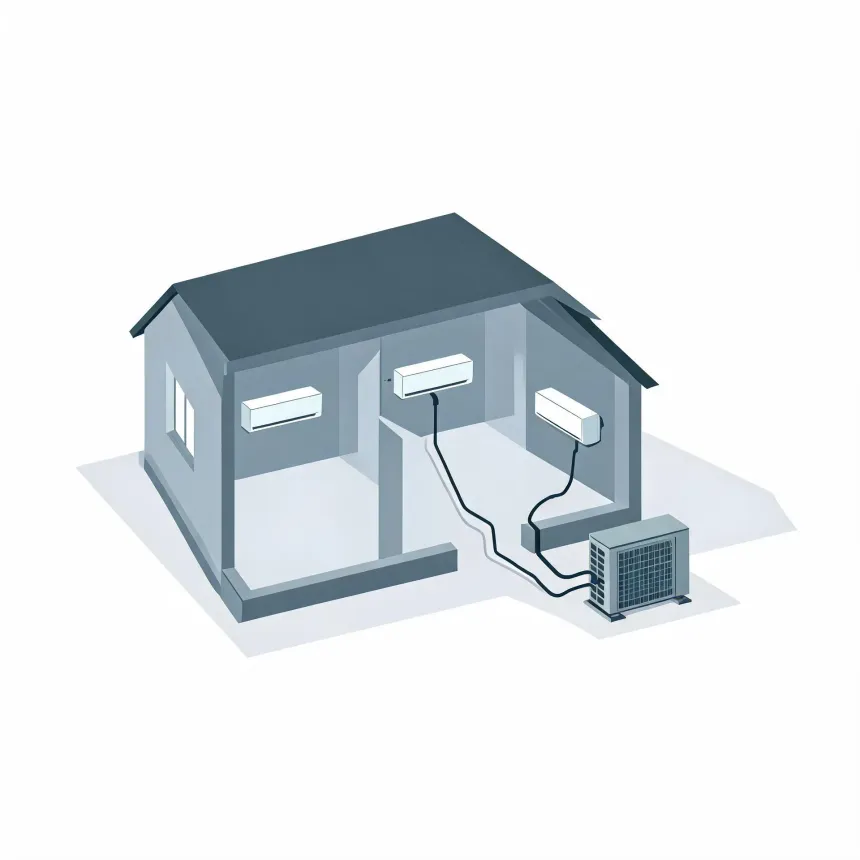
- That depends on how many indoor heads the outdoor unit runs. A single-zone system covers one room or one open space. A multi-zone system splits output across several indoor heads, so a bedroom, a living room, and a home office can each get their own head and their own thermostat. A contractor sizes the outdoor unit and the number of heads to the square footage and layout of the specific house.
- Can a mini split heat a whole house?
- It can, with enough indoor heads placed to reach every room. Homes here need heat from October through April, so the system has to be sized for nights that average 28°F, not just for mild days. A contractor will look at your home's layout, insulation, and current heat source before saying whether a whole-house mini split setup makes sense or whether it should work alongside your existing furnace.