Gas heat, 3 to 5 years
Most New York homes run gas furnaces that push air through the same ducts all winter. A buildup of dust and debris in there gets carried into every room you heat.
Most homes should have their air ducts cleaned every 3 to 5 years. Your house holds its ductwork fixed in place, and over years it collects dust, pet hair, and whatever drifts in from outside. New York summers run humid, and that moisture gets pulled into the system too, which gives dust and debris something to stick to inside the ducts. Homes with gas furnaces push air through the same ducts all winter, so what settles in summer gets circulated again once the heat kicks on in the fall. If anyone in the house has allergies, or if you've had recent renovation work that kicked up drywall dust or insulation fibers, cleaning sooner makes sense. Skipping it too long doesn't damage the furnace itself, but it does mean the air moving through your home all winter is carrying more of what's built up for years.




Most New York homes run gas furnaces that push air through the same ducts all winter. A buildup of dust and debris in there gets carried into every room you heat.
Finding a duct cleaning contractor, checking licenses, and comparing quotes takes time. Answer a few questions and a contractor who covers your area gets in touch with you directly.
You don't want to pay for cleaning you don't need, but you also don't want to ignore a system that's circulating dust through every room. Since you can't see inside the ductwork yourself, you're looking for signs you can actually check from where you stand, not a guess based on the calendar alone.
Pull a vent cover off and look inside with a flashlight. If you see a gray buildup coating the metal, that same dust is getting pushed into the room every time the furnace or AC runs. A musty smell when the system first turns on is another sign, especially after a humid New York summer, since moisture in the ducts gives mold something to grow on. Dust that resettles on furniture within a day or two of cleaning the house points the same direction. None of these replace the 3 to 5 year schedule, but they tell you when to move sooner, particularly if anyone in the house has allergies that flare up indoors.
A tech inspects every supply and return vent in the house.
A negative air machine connects to the ductwork to pull debris.
Rotating brushes or air whips knock dust loose inside the ducts.
The vacuum draws loosened dust and debris out through the system.


Answer a few questions about the duct cleaning and skip the search.
Describe your ductwork job, and a local pro who handles it gets in touch.
There's no charge for the request.



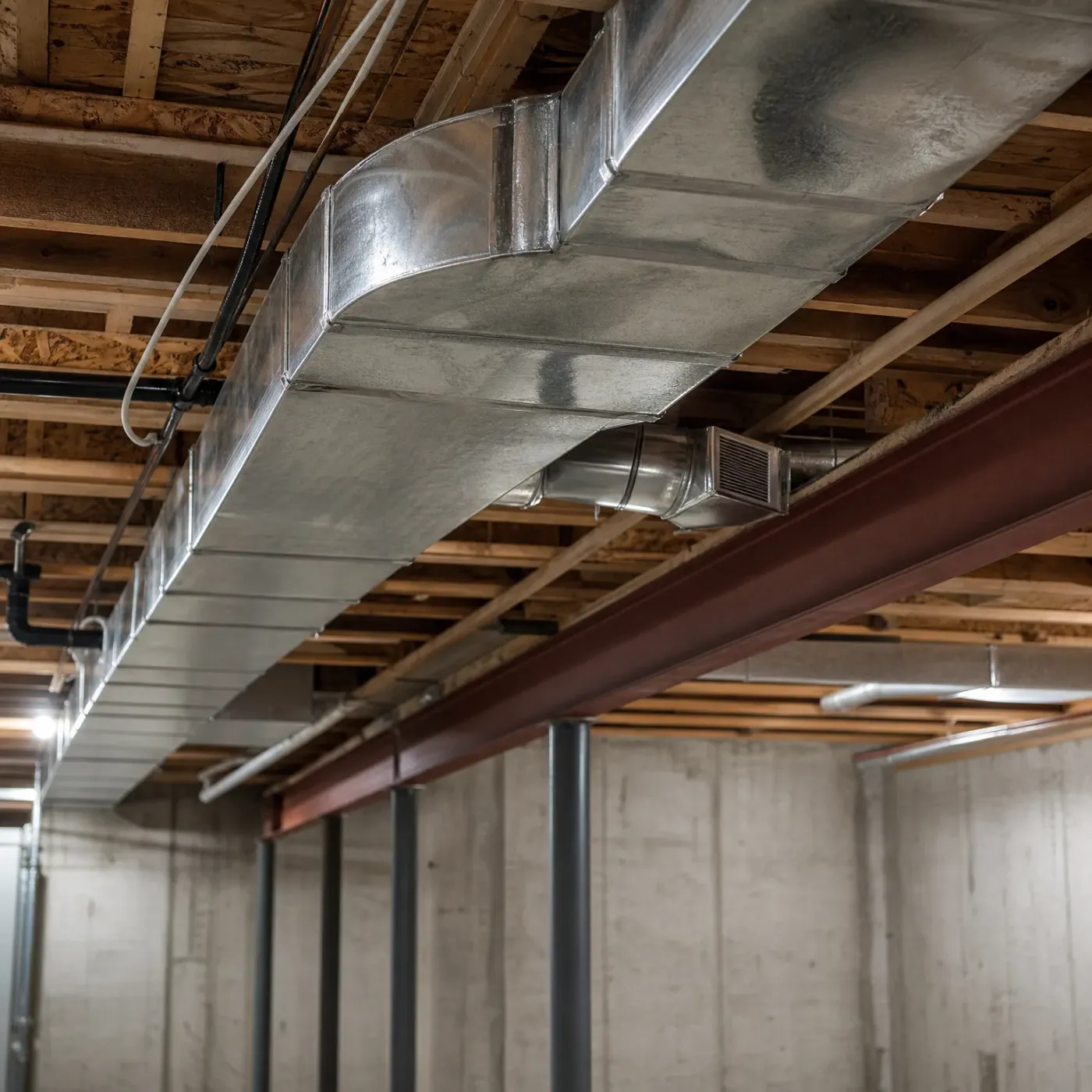
Supply and return ducts move air from the furnace to every room without resistance. Air moves through at the rate the system was built for, so rooms heat and cool evenly and the furnace isn't working around a blockage.

Dust sits along the inside of the sheet metal and collects at the joints and low points. Air still moves, but it picks up what's settled in there and carries it into the rooms you spend time in.
At 26.39 cents per kilowatt-hour, every bit of resistance in your ducts costs you more here than almost anywhere else. Clogged ducts make your blower motor work harder to push air through, and that extra draw shows up on your bill month after month until the buildup is cleared.
EIA-861 2025 statewide residential average

Spring sun comes through the window and lands on the ceiling vent grille, and that's when you see it. A soft gray line of dust along every slat, thick enough to catch the light. You look down and the side table under it has the same film, the one you wiped clean last week. The couch arm too. You haven't run the AC yet this year, just the furnace fan to move the spring air around, and every time it kicks on, a little more settles on the glass, the lamp shade, the floor by the window. You make a note to deal with it before summer turns muggy and that vent runs all day.

That's the answer. Most New York homes land somewhere in that window, and the exact year depends on how your house collects dust and how hard your furnace has run. You don't need to guess at it alone or figure out which contractor to call first.
Getting matched takes the search out of it. Instead of calling around, describing the same buildup to three different companies, and sorting through quotes that don't line up, you answer a few questions once and a contractor who handles duct cleaning in your area reaches out to you. You already know when the work is due. The rest is making the call happen.


A pro who works on ducts