Mini Split Installation in Geneva, NY
A new system here will heat from October through May and cool from July through August every year. Tell us about the house, and a licensed contractor who covers Ontario County will get in touch.
Tell us about the job
It takes about a minute.
Ten months of work for a mini-split in Geneva
Winter nights here average 19°F from December through February, and homes need heat from October through May. That is 8 months of heating, then 2 more months of cooling in July and August when afternoons average 79°F. Only a few weeks in spring and fall ask nothing of the system at all.
A mini-split installed here needs to hold up on both ends of that range, pulling heat from 19°F air and still keeping the house cool on a 79°F afternoon. Any unit manufactured now has to meet 14.3 SEER2 for cooling and 7.5 HSPF2 for heating, but a system running 10 months a year earns its keep on how well it does that job on the coldest nights, not just the rating on the box.
- 8 months
- October through May, your system heats
- 2 months
- July through August, it cools
- 19°F
- the average winter night it heats against
- 79°F
- the average summer afternoon it cools against
NOAA nClimDiv, 1991–2020 normals
- Is a mini split worth it?
- For most homes here, yes, because the system heats and cools and this area needs both. Geneva homes need heat October through May and cooling in July and August, so a system that does both from one outdoor unit is doing real work most of the year. Winter nights average 19°F here, and heat pumps built for cold climates are designed to keep working at that temperature, though a contractor should confirm the unit chosen is rated for it. If your home already has a working furnace or boiler, a mini split can still make sense for a room or addition that never gets even heat or cooling.
- How many rooms can a mini split cover?
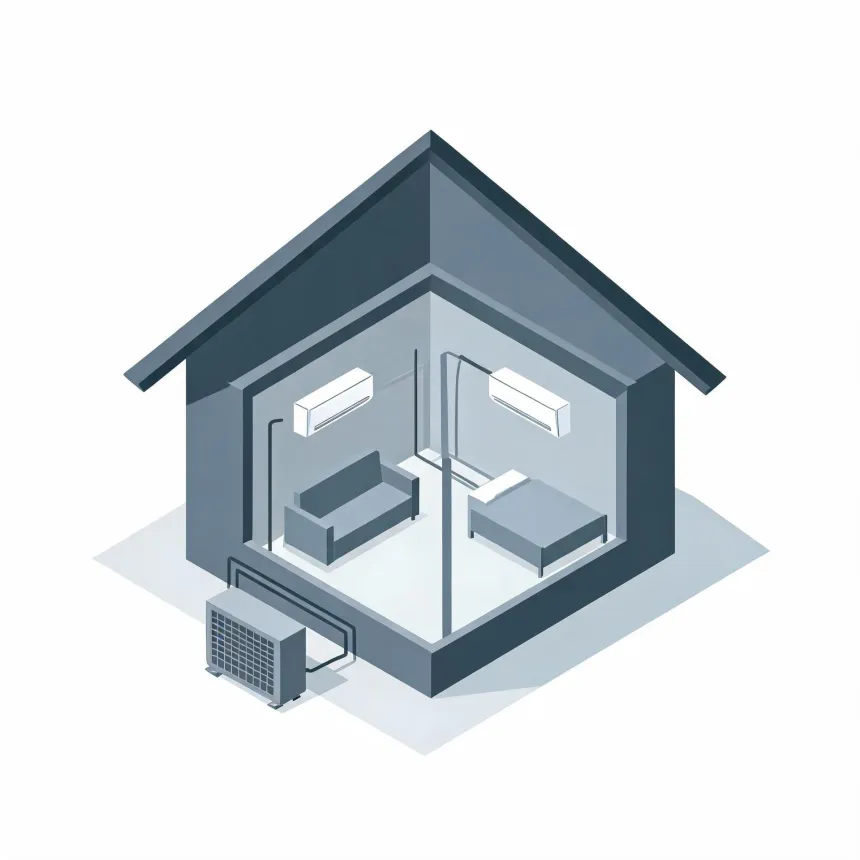
- A single outdoor unit can run one indoor head or several, up to whatever limit the manufacturer sets for that model. Each indoor head is sized and placed for the room it serves, so the number you need depends on how many rooms you want covered and how those rooms are laid out. A contractor will walk the house and size the system room by room rather than apply a fixed rule.
- Can a mini split heat a whole house?
- It can, if there are enough indoor heads placed to reach every room and the system is sized for how cold it gets here. Winter nights in Geneva average 19°F, so the heat pump has to be rated to keep producing heat at that temperature without leaning on backup heat. A mini split does not move air through ducts the way a furnace does, so each room that needs heat generally needs its own indoor head. A contractor can look at the floor plan and say what that takes for your house.