

What to do when the heat goes out in New York

Send the request today and stop worrying about who to call.

Hand it off

First, check the thermostat and the breaker before you assume the worst. A furnace that won't fire is often the igniter or the flame sensor, and both can fail on a unit that's otherwise fine. If the burners click but won't stay lit, that's the flame sensor telling the system it doesn't trust what it sees. If there's no click and no flame at all, the igniter itself may be the problem, or the gas valve isn't getting the signal to open. Some furnaces stop because the condensate line backed up and tripped a safety switch. Any of these keeps the whole system down, and in New York, where most homes heat with gas, that means no heat until a licensed technician finds which part failed and replaces it. This isn't a job to patch with a reset and hope.

A gray furnace cabinet in a basement with sheet-metal ductwork, white PVC vent pipes, and black gas piping against a concrete wall and wood-framed partition on a bare concrete floor.

Furnace Running Right

This is what a healthy setup looks like: clean connections to the duct, steady pipes, no mess around the unit. If yours looks like this and still won't fire, the problem is likely small, an igniter or a flame sensor, not the whole system.


A gray metal furnace with two white PVC vent pipes stands on a concrete floor beside galvanized sheet-metal ductwork in a basement or utility space with wood framing.

Furnace Showing Its Age

Rust on the cabinet or pipes that look worn are signs the furnace has been working hard for years. A unit in this shape is more likely to need a part replaced soon, and a repair now can tell you how much life is left in it.

Why does my furnace's flame keep going out after a few seconds?

You hear the burners catch, you see the flame, and then it dies out again after a few seconds. The thermostat is set right, the breaker's fine, and it still won't stay lit. On a cold morning in New York this is a familiar complaint, and it points to one part doing its job wrong rather than the whole furnace failing.

A dirty or misaligned flame sensor is almost always the cause

The flame sensor's job is to confirm the burners are actually lit. If it's coated in soot or sitting at the wrong angle, it can't sense the flame, so the control board shuts the gas valve as a safety measure, even though the furnace fired correctly. That's why the flame catches, holds for a few seconds, then cuts out. It isn't the igniter at that point, since the igniter already did its job getting the burners lit. A technician cleans the sensor with a light abrasive or replaces it if the rod is cracked or worn. Either way it's a quick fix once someone's looked at it, not a sign the furnace itself is failing.

A beige high-efficiency furnace stands on a concrete basement floor beside sheet-metal ductwork, with white PVC vent pipes and a gas line running along an insulated wood-framed wall.

Furnace Running Right

The flue pipes are tight, the gas valve and line sit clean against the wall, and nothing around the unit looks disturbed. A furnace set up like this that still won't fire is usually down to one small part, not the cabinet or the ductwork.

An older metal furnace with a louvered front panel stands against a concrete basement wall, connected to sheet-metal ductwork and a flue pipe, with copper and steel pipes running alongside.

Furnace Showing Its Age

Dust on the louvers and a cabinet that's seen better days don't mean the furnace is done, but they're worth a second look. A unit that's gone years without service is more likely to need more than an igniter or a flame sensor.

A middle-aged woman with shoulder-length dark hair, wearing a gray cardigan over a cream top, sits in an upholstered armchair and looks toward a sunlit window, with a shelf holding framed pictures and a plant behind her.
A woman and a child wrapped together in a knitted gray blanket on a couch, with the child's head resting on her shoulder and a lit table lamp and houseplant in the background.

Call Now or Wait It Out

Call Now

  • A furnace that won't fire on a January night in New York can mean pipes freezing if the house has no other heat source.
  • A failed igniter or flame sensor usually means a part swap, not a new system, and a local tech who works on these units every winter knows which one it is fast.
  • If you smell gas or hear the burners clicking without catching, that's not something to leave until morning.
  • Getting one licensed contractor out to look at it means you're not stuck waiting on your own research while the house gets colder.
  • A tech who services furnaces all season in this area has likely seen your exact model fail this exact way before.

Wait and Watch

  • If the thermostat was bumped or a breaker tripped, resetting it might bring the furnace back with no repair needed at all.
  • A furnace that's warm to the touch and just cycling oddly is a different problem than one that's stone cold and silent.
  • If the house holds heat well and it's not bitter cold outside, a few hours' delay to call around isn't an emergency.
  • Waiting makes sense if you've already checked the basics and the furnace is holding a weak flame rather than refusing to light at all.
  • Gas furnaces in New York homes often share a line with the water heater, so if hot water still works, the gas supply itself probably isn't the issue.
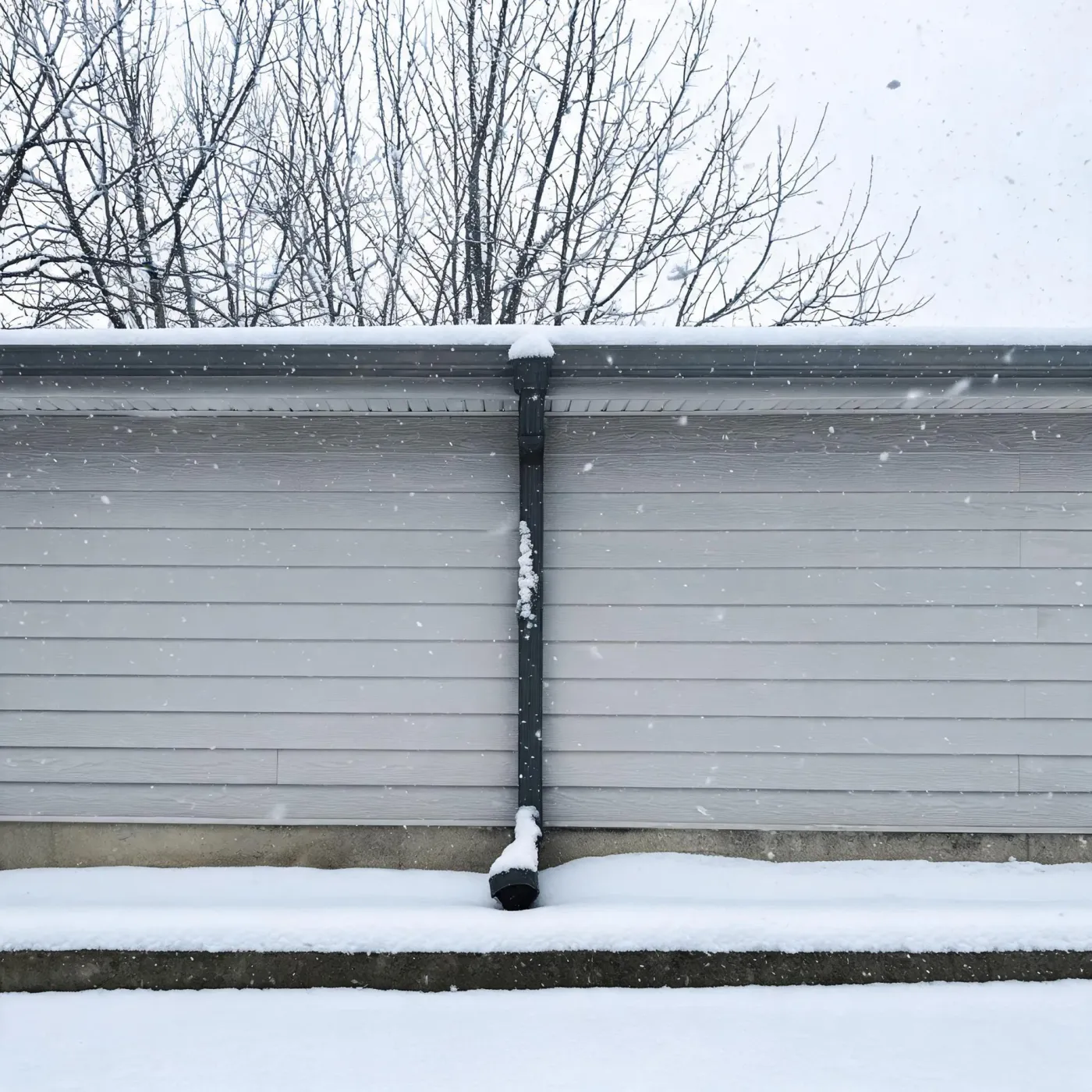
Exterior wall of a building with light gray horizontal siding and a dark downspout running to the ground, with snow on the roofline, steps, and ground, and bare trees behind during falling snow.

New York winter nights average 24°F statewide, per NOAA. That's cold enough that a furnace isn't cycling on and off anymore, it's running long stretches just to hold the house steady. Every one of those stretches puts another load on the igniter or the flame sensor, the same parts that tend to fail first. If yours has gone out on a night like that, you're not dealing with a freak problem, you're dealing with what that part does under a long, steady draw. Once you send in a request, a licensed tech local to your area takes it from there, someone who sees this exact failure all winter and knows which part to check first.

NOAA nClimDiv 1991-2020 county normals weighted by homes

One request and it's handed off

The pro who reaches out is licensed in New York.

No fee to send it, and nothing to sign.

  1. Thermostat calls for heat and sends power to the control board.

  2. Inducer motor starts, pulling air through to vent exhaust safely.

  3. Pressure switch confirms draft, letting the sequence move forward.

  4. Hot surface igniter or spark igniter heats up to ignition temperature.

Is your house actually getting cold

Put a hand over the vents. If air is moving but it's not warm, that's different from no air at all, and it points to a different part. Check rooms away from the thermostat too, a bedroom down the hall or a basement, since those can lag behind even when the thermostat reads fine. Listen for the furnace trying and failing: a click, a pause, then nothing, or the burners catching and dying a few seconds later. Watch the thermostat display for an error code if it has one. In New York, a house that goes a full night without heat in January can see pipes near outside walls get close to freezing, especially if there's no other heat source running.

A beige residential gas furnace with white PVC vent pipes, copper and yellow gas lines, and adjacent sheet-metal ductwork stands on a concrete floor beside a plain white wall.

What gas costs you in New York

Most furnaces here run on gas, and gas stays the cheaper way to heat a New York house through the winter. Electric resistance heat costs more here than almost anywhere in the country. That's part of why a gas furnace is worth fixing rather than replacing with something else. A failed igniter or flame sensor doesn't change any of that. It's a small part on a system that still makes sense to keep running.

A gray high-efficiency furnace with white PVC vent pipes and metal ductwork stands on a concrete floor beside a plain off-white wall in a basement.

Why the flame sensor fails first

The flame sensor sits right in the burner flame every time the furnace runs. Over a winter of long heating cycles, it picks up a thin coating of oxidation that insulates it just enough to stop sensing the flame it's sitting in. The furnace reads that as no flame and shuts the gas off, even though the burners lit fine seconds earlier. A tech can usually clean or swap the sensor in one visit without touching anything else on the unit.

Winter nights average 24°F statewide

At 24°F, your furnace isn't just kicking on now and then, it's holding that line for hours at a stretch most winter nights. That's a lot of hours on the igniter and flame sensor every single night, which is why those are usually the first parts to give out.

NOAA nClimDiv 1991-2020 county normals weighted by homes

Where This Leaves You

  • A furnace that won't fire in a New York winter is usually a failed igniter or flame sensor, not a dead system.
  • Checking the thermostat and the breaker first rules out the simplest causes before anything gets taken apart.
  • A furnace that won't stay lit after a few seconds points to the flame sensor, not the burners themselves.
  • At 24°F, a furnace runs long stretches just to hold the house steady, which wears down the igniter and flame sensor faster than mild weather does.
  • A local tech who works on these units every winter knows which part usually fails before opening the cabinet.
  • Gas stays the cheaper way to heat a New York house, so a working furnace is worth fixing rather than replacing outright.

A furnace that won't fire on a cold night in New York is rarely as bad as it feels at 2 in the morning. Start simple. Check the thermostat is set where you think it is, and check the breaker didn't trip. Those two things take a minute and rule out the easiest fixes. If the burners light and then die a few seconds later, that's the flame sensor telling the system something's wrong even when nothing serious is. The igniter and the sensor take the brunt of the work once it's cold enough that the furnace is running long stretches instead of short cycles, and at 24°F on a typical New York winter night, that's most nights from December through February. That wear is normal. It's also why these two parts fail more than anything else in the cabinet. None of this means the system is done. A gas furnace is still the cheaper way to heat a house here, and a failed igniter or sensor is a part swap, not a reason to replace the unit. What matters now is getting someone who works on these furnaces all winter to look at it, because they'll know what usually fails on a night like this before they even open the cabinet. That's a faster path back to heat than guessing room by room.

A gray-haired man in a dark sweater sits on a light gray sofa in a living room, looking toward a sunlit window with trees outside.
A gray-haired man in a dark blue sweater sits on a light gray sofa in a sunlit living room, looking off to the side, with a potted plant, shelving unit, and large glass doors behind him.
A bearded man with graying hair in a dark green sweater sits on a sofa in a living room, looking off to the side, with a sliding glass door and a dim kitchen doorway behind him.
A gray-haired man in a dark knit sweater sits on a light gray sofa in a living room, looking toward a sunlit window, with houseplants, a lamp, and framed art in the background.

Furnace Repair

Done looking for a furnace pro

Only one pro gets your request, so you hear from one company.

A black-framed smartphone standing upright against a plain white background, its screen filled with solid green.
RepairFurnace or heatingNew York
Step 1 of 2

What ZIP code is the job in?