Mini Split Installation in Schenectady, NY
A new system here will heat from October through May and cool from July through August every year. Tell us about the house, and a licensed contractor who covers Schenectady County will get in touch.
Tell us about the job
It takes about a minute.
What a mini-split here has to handle
Winter nights here average 17°F from December through February, and a mini-split's heat pump has to keep pulling warmth from that cold air. Homes in Schenectady need heat from October through May, eight months a year, so the unit you install is working most of the time it's installed to work. Summer only asks for two months of cooling, with afternoons around 79°F, but the same system covers both jobs.
Any mini-split manufactured now has to clear 14.3 SEER2 for cooling and 7.5 HSPF2 for heating, the federal minimum for split-system heat pumps. With eight months of heating and a low averaging 17°F, the heating side of that rating matters more here than the cooling side does.
- 8 months
- October through May, your system heats
- 2 months
- July through August, it cools
- 17°F
- the average winter night it heats against
- 79°F
- the average summer afternoon it cools against
NOAA nClimDiv, 1991–2020 normals
- Is a mini split worth it?
- For most homes here, yes, especially if you're heating a room that gas doesn't reach or trying to cool one that never gets comfortable in July and August. Mini splits handle both jobs with one unit, and they keep working efficiently even when the outdoor temperature drops well below freezing, which matters when your winter nights average 17°F. They make the most sense for additions, converted attics, garages, or homes without ductwork, where running new ducts would mean tearing into walls. If your whole house already has even heat and cooling you're happy with, a mini split may not add much.
- How many rooms can a mini split cover?
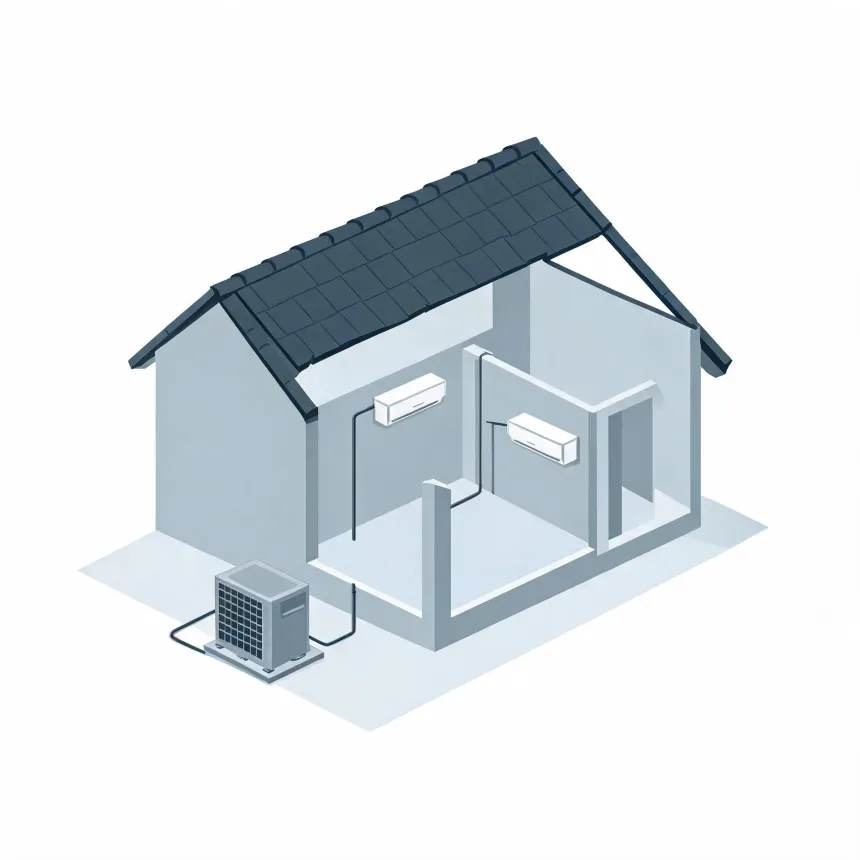
- A single outdoor unit can run one indoor head or as many as eight, depending on the system. Each indoor head is sized and placed for the room it serves, so a two-bedroom addition might use two heads on one outdoor unit, while a larger home could use several outdoor units to cover more zones. The right number comes down to the layout of the house and how those rooms are used, which is something a contractor works out room by room rather than guessing at.
- Can a mini split heat a whole house?
- It can, if it's sized and placed for that. A whole-house mini split setup uses enough indoor heads, one or more in each room or zone, tied to one or more outdoor units built to keep working in cold weather. That matters here, where homes need heat from October through May and winter nights average 17°F. Whether it makes sense to replace gas heat entirely or add a mini split alongside it depends on the house, so a contractor should look at the whole layout before deciding.