Mini Split Installation in Binghamton, NY
A new system here will heat from September through May and cool from July through August every year. Tell us about the house, and a licensed contractor who covers Broome County will get in touch.
Tell us about the job
It takes about a minute.
What a mini-split has to handle in Broome County
Winter nights here average 18°F, and a mini-split heat pump has to keep pulling heat from air that cold for nine months, September through May. Summer only asks for two months of cooling, with afternoons around 79°F, but the same unit is doing both jobs for eleven months of the year. There is almost no season off.
Any mini-split installed new has to meet the federal minimum for a split-system heat pump, 14.3 SEER2 for cooling and 7.5 HSPF2 for heating. Those numbers apply whether the home is adding a mini-split or replacing one, since the standard treats ductless systems the same as any other split system.
- 9 months
- September through May, your system heats
- 2 months
- July through August, it cools
- 18°F
- the average winter night it heats against
- 79°F
- the average summer afternoon it cools against
NOAA nClimDiv, 1991–2020 normals
- Is a mini split worth it?
- For most homes, yes, especially if you're heating with something old or expensive to run room by room. A mini split puts heat right where you need it instead of pushing air through ducts that lose energy along the way. Winters here run cold, down to 18°F on average on a January night, so look for a cold-climate model rated to keep producing heat at those temperatures rather than switching over to backup heat. Heat is needed here from September through May, so the heating side of the unit matters more than the cooling side.
- How many rooms can a mini split cover?
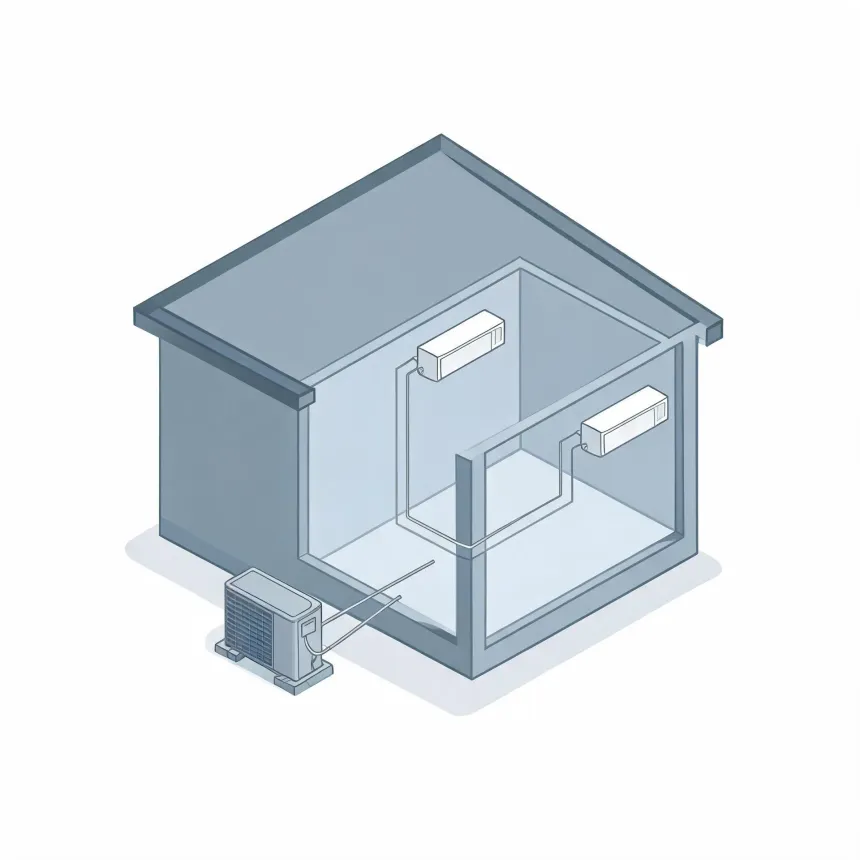
- That depends on how many indoor heads the outdoor unit runs. A single-zone system covers one room or one open area well. A multi-zone system adds more indoor heads, each with its own thermostat, so it can cover several rooms at once. The more zones on one outdoor unit, the more a contractor has to weigh capacity against the square footage and layout of the house, not just the number of rooms.
- Can a mini split heat a whole house?
- It can, if it's sized and placed for the whole house rather than added room by room. That means a head in every room that needs heat, or a layout that lets air move between spaces, and enough outdoor unit capacity to cover the coldest nights here, which average 18°F in the middle of winter. A cold-climate mini split is built to keep producing heat at those temperatures instead of relying on backup heat. A contractor can work out whether a whole-house system fits the layout of a particular house or whether it makes more sense alongside the existing heat source.